 How Much Are They Worth?
Celebrity fortunes, explained

How did Ozzy Osbourne build this fortune?
The answer unfolds through the career, earnings, deals and assets behind the headline estimate.
Ozzy Osbourne before the fame
The background and early turning points that shaped Ozzy Osbourne’s route to prominence.
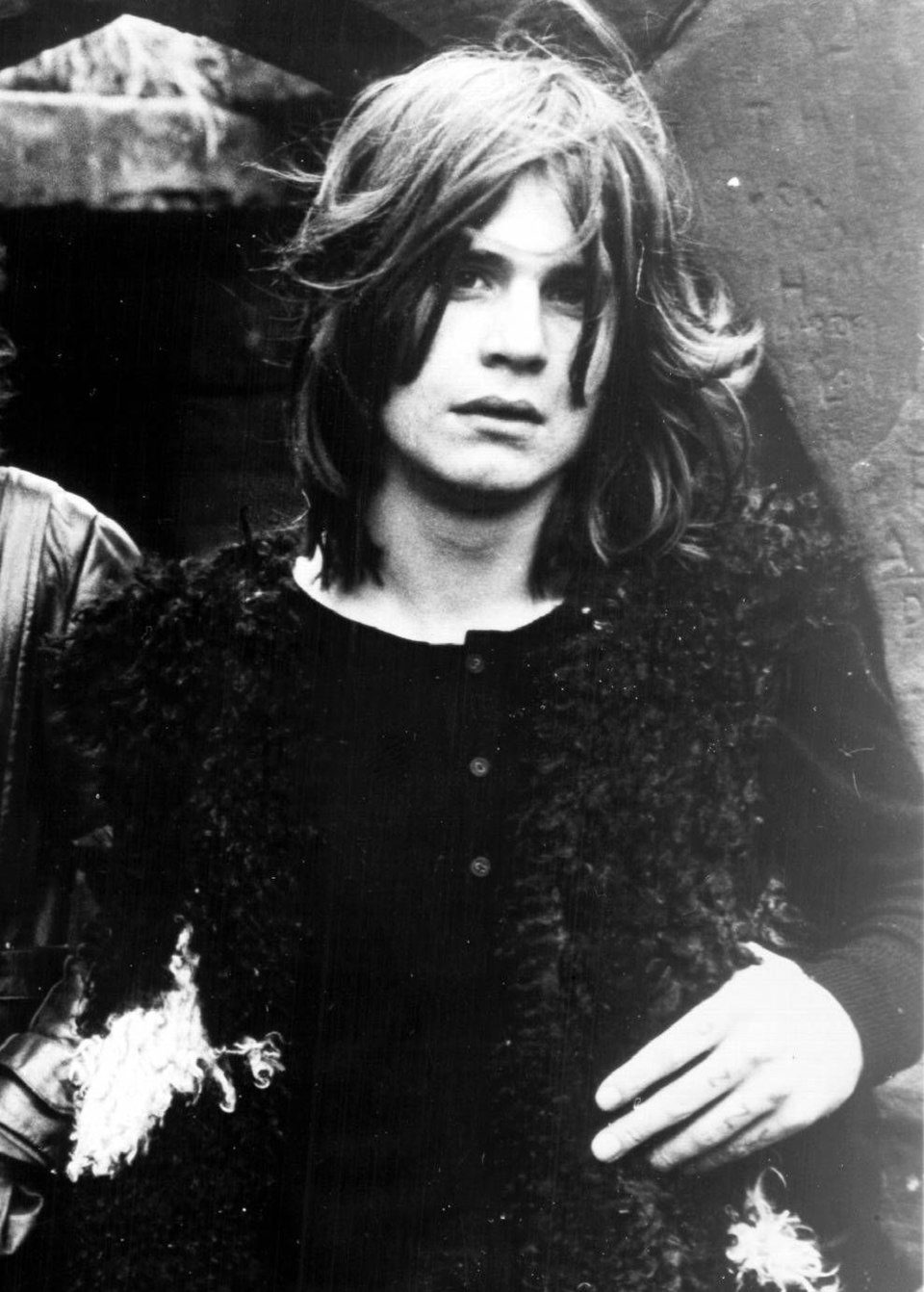
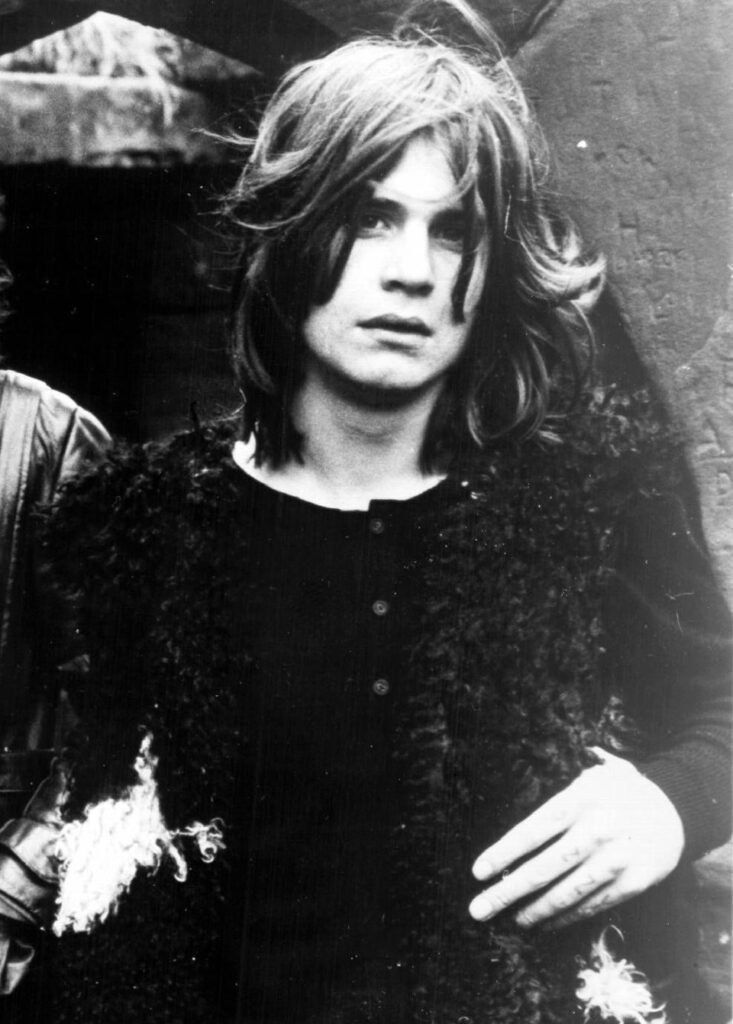
John Michael Osbourne was born on 3 December 1948 in Aston, Birmingham, one of six children in a working-class household. He left school at fifteen and worked in a slaughterhouse and a car factory before music. In 1967 he formed a band with the bassist Geezer Butler, joined by the guitarist Tony Iommi and the drummer Bill Ward; briefly called Earth, they became Black Sabbath. He died on 22 July 2025 at 76, having lived for years with Parkinson’s disease (Variety). What follows is the fifty-five years in between.
Birmingham in the late 1960s had a dense blues-rock scene and no money in it. Osbourne advertised himself with a note in a local record shop reading “Ozzy Zig needs gig”, which is how Butler found him. Black Sabbath spent 1968 and 1969 playing clubs in England and Germany on almost nothing, then recorded their first album in a single day for a few hundred pounds. It reached the UK top ten in February 1970 despite being dismissed by most of the music press (The Guardian).
Ozzy Osbourne’s breakthrough years
The career decisions and defining moments that turned recognition into sustained earning power.
The first three Black Sabbath albums did something almost no other records have done: they created a genre. War Pigs, Paranoid, Iron Man and Sweet Leaf set the template heavy metal has worked from ever since, and they have never stopped selling, which is why the catalogue still pays royalties half a century later. He was fired from the band in 1979, and the second career started almost immediately: Blizzard of Ozz arrived in 1981 with the guitarist Randy Rhoads and went platinum, led by Crazy Train. Thirteen solo studio albums followed.
What Ozzy Osbourne’s work can earn
Reported pay, contracts, royalties and performance income reveal how the fortune was funded.
He is one of a small number of artists inducted into the Rock and Roll Hall of Fame twice – with Black Sabbath in 2006 and as a solo artist in October 2024 (Rock & Roll Hall of Fame). He won five Grammy Awards across four decades, spanning Black Sabbath’s “Iron Man” and his own late solo work. Between them the two careers produced a body of work that outlived every genre that was supposed to replace it.
What the music paid him. Our estimate is that Osbourne’s own craft – records, songwriting and the stage – earned him roughly $200 million to $300 million gross across fifty-five years. Two catalogues drive it, and they pay very differently. The Black Sabbath records are credited to all four members, so his writer’s share of Paranoid or Iron Man is a quarter of the pool, and the band’s early contracts were the poor ones typical of 1970 Birmingham. The solo catalogue, thirteen studio albums with his name on the sleeve, paid him as the artist rather than as one of four. Touring is the third and largest line: he headlined arenas almost continuously from 1981 to 2018. The workings are below, and the assumption doing the most work is that quarter share of Sabbath.
The third career was television. The Osbournes ran on MTV from 2002 and won the Primetime Emmy for outstanding reality programme in its first year, turning a heavy metal singer into a mainstream figure in his fifties and reaching an audience that had never bought one of his records. Birmingham gave him a star on its Walk of Stars, and by the end of his life the city treated him as a civic figure rather than the local scandal he had been in the 1970s.
Ozzy Osbourne’s business beyond the main career
Endorsements, ownership interests and investments can keep compounding long after the initial breakthrough.
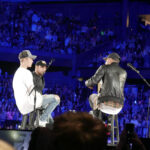
The television years made him bookable for advertising as he never had been. The best-known example was Best Buy’s first Super Bowl commercial in February 2011, in which he appeared with Justin Bieber (CBS News). He took a scattering of similar work through the 2000s. Campaigns of that scale typically pay a recognisable face in the low seven figures, which makes advertising a useful but minor line beside the music.
His most substantial business was Ozzfest, the travelling festival he and Sharon Osbourne created in 1996 after Lollapalooza turned him down. It ran almost every year until 2018, expanded to Britain, Germany, Belgium and Japan, and launched Slipknot, System of a Down and Limp Bizkit among others (Billboard). A festival the artist owns keeps the promoter’s margin as well as the performance fee, which made it structurally different from anything else he did.
Ozzy Osbourne’s notable luxury item
A reported property or major asset offers a tangible glimpse of the wealth behind the public estimate.
He and Sharon Osbourne bought Welders House, a listed country property in Buckinghamshire, in the early 1990s, and it remained the family’s British base for more than thirty years. Their Los Angeles home, in Hancock Park, was listed for sale in 2022 at a reported asking price in the high teens of millions of dollars and later withdrawn. Taken together, our estimate puts the two houses at $25 million to $40 million. The larger asset is the music: a writing and performing share in four of the most durable albums in rock, which on the multiples the catalogue market paid through the 2020s would fetch a good deal more than the property.
Ozzy Osbourne’s estimated net worth
Public estimates vary because private contracts, investments, taxes and liabilities are not fully disclosed.
How this estimate is calculated
The music, line by line. Black Sabbath have sold on the order of 70 million albums since 1970. At a blended net band royalty of about $0.75 a unit that is roughly $52 million to the four of them, so about $13 million to him, and his quarter of a publishing pool worth perhaps $40 million to $70 million over the same span – those songs are licensed relentlessly into films, advertisements and games – adds $10 million to $18 million. The solo catalogue, on the order of 55 million units at roughly $1.25 as the named artist, is about $70 million, with co-writing on most of it worth another $25 million to $45 million. Live work is the biggest line: some 1,500 headline shows between 1981 and 2018, at a net to the artist of $60,000 to $110,000 a night, gives $90 million to $165 million. Those lines total $208 million to $311 million, rounded above to $200 million to $300 million gross.
From earnings to estate. Take roughly 40 to 45 per cent off for four decades of British and American tax and a further slice for a management arrangement kept inside the family, and $110 million to $170 million survives. On top of that sit the things the music made possible rather than paid for: an ownership position in Ozzfest, which for two decades kept the promoter’s margin as well as the performance fee (Billboard); television income from The Osbournes and its successors; the advertising work; and the two houses. The catalogue itself is carried at nil in this sum, because he still owned it – counting both the royalties it paid him and what it would fetch would count the same asset twice. One caution about headline numbers attached to his name: his final concert was first reported as raising more than $190 million for charity (Rolling Stone), and Forbes later found the sums that actually reached the three charities were very much smaller (Forbes). Gross and net are different animals, here as everywhere.
Confidence: Indicative — our estimate, built from unit sales, a quarter writer’s share of the Black Sabbath catalogue and fifty-five years of touring, with the estate itself passing privately.
Think you know Ozzy Osbourne? Take the quiz: Easy · Medium · Legendary
His last concert was a charity event. On 5 July 2025 he played Villa Park in Birmingham, a mile or so from where the band formed, the first time the original Black Sabbath line-up had performed together in twenty years (Ozzy Osbourne official site). He sang five songs seated on a throne before Sabbath closed the night, with 42,000 people at the ground and a paying livestream audience. Profits went to Cure Parkinson’s, Birmingham Children’s Hospital and Acorns Children’s Hospice (Cure Parkinson’s).
He spent the 1980s in court and in the tabloids: an arrest in San Antonio in 1982, and civil suits alleging that “Suicide Solution” had caused harm, all dismissed on First Amendment grounds. There is also a postscript to the Villa Park concert, taken up below, in which the sum the event was said to have raised and the sum the charities received turned out to be very different numbers.