 How Much Are They Worth?
Celebrity fortunes, explained








How did XXXTentacion build this fortune?
The answer unfolds through the career, earnings, deals and assets behind the headline estimate.
XXXTentacion before the fame
The background and early turning points that shaped XXXTentacion’s route to prominence.
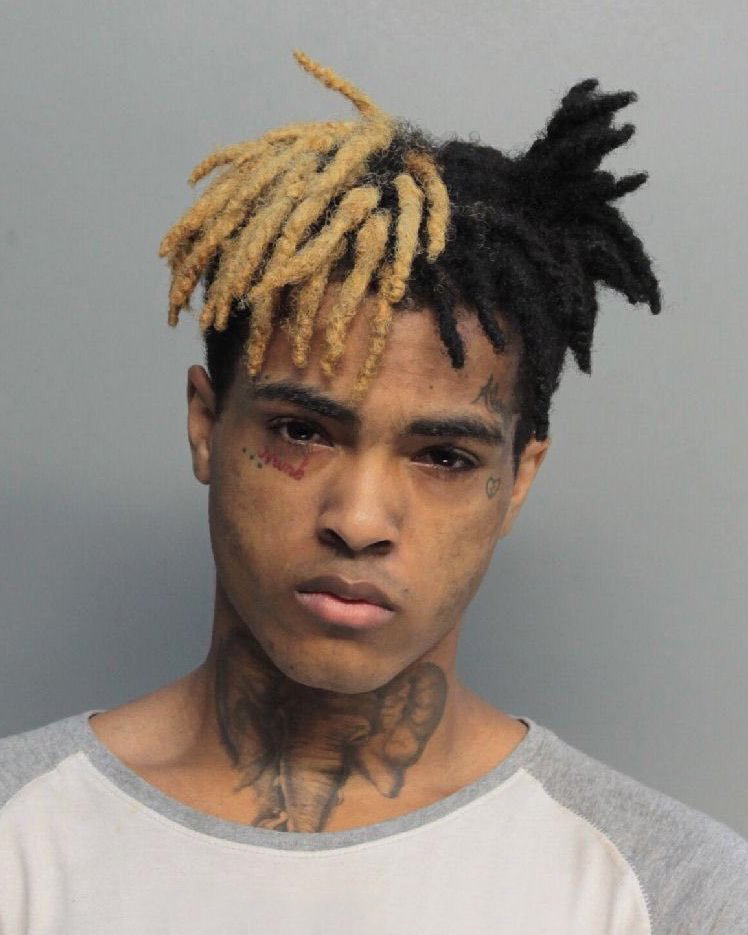
Jahseh Dwayne Ricardo Onfroy was born on 23 January 1998 in Plantation, Florida, and was raised largely by his grandmother in Lauderhill. He was expelled from school, spent time in a juvenile detention centre and began writing and recording music there. Everything he earned, he earned in a little over three years, between his first viral upload and his twentieth birthday.
He was shot and killed during a robbery outside a motorcycle dealership in Deerfield Beach, Florida, on 18 June 2018, aged twenty; three men were convicted of his murder in March 2023 (Billboard, NPR). His son, Gekyume, was born seven months after his death and is the principal heir to an estate that has gone on to earn far more than he did while alive.
He uploaded early tracks from 2013 as part of a loose scene of South Florida artists working entirely outside the label system, trading songs on SoundCloud and building an audience without radio, video budgets or a publicist. Look at Me!, recorded for almost nothing and released in 2015, became a streaming phenomenon in early 2017, reached the top 40 of the Hot 100 and was certified platinum that August, before any industry infrastructure was involved.
The economics of that period were tiny. A SoundCloud artist in 2016 earned from live shows and merchandise, and a breakout single of that kind paid tens of thousands of dollars in its first months rather than millions. The value was in the audience, which he took to a distributor of his choosing rather than to a major label.
XXXTentacion’s breakthrough years
The career decisions and defining moments that turned recognition into sustained earning power.
His debut album 17 reached number two on the Billboard 200 in August 2017. ? debuted at number one in March 2018 and its lead single Sad! topped the Hot 100 after his death, one of two number-one entries and nine Hot 100 songs in a career of barely eighteen months on the charts (Billboard). Sad! was later certified diamond by the RIAA for ten million units in the United States (The Source).
What the music paid him is our estimate. Across the two albums and the singles that preceded them he accumulated in the region of 3 to 5 billion streams worldwide in his lifetime; at 0.003 to 0.004 dollars a stream paid to the master owner, that is 9 to 20 million dollars flowing to the rights-holder side of his catalogue. Because he released through the independent distributor Empire rather than assigning his masters to a major, the artist share of that money was high, and after a distribution fee of 10 to 20 per cent his gross streaming income comes to roughly 8 to 16 million dollars. His 2017 Revenge tour, played in clubs and theatres, and his merchandise add a further 1 to 2 million, giving 10 to 18 million dollars of gross music income before management, tax and the costs of a very fast rise. The assumption is a high-ownership independent deal; its exact split is private.

What XXXTentacion’s work can earn
Reported pay, contracts, royalties and performance income reveal how the fortune was funded.
Weeks before his death he signed a new arrangement with Empire for his third album that three people briefed on its terms put at around 10 million dollars, structured to keep creative control and ownership on his side of the table (Variety, Billboard). Empire’s founder, Ghazi Shami, confirmed that a significant amount of material for the album had already been recorded (The Fader). That structure is the decisive fact in his financial story: the catalogue stayed with him and, after him, with his estate.
The result is visible in the posthumous figures. Forbes placed him eleventh on its 2019 list of the highest-earning dead celebrities with 10 million dollars for the year, on the strength of at least 5.6 billion American streams in twelve months, which made him the most-streamed deceased artist in the country (Forbes, XXL). Skins, the first posthumous album, debuted at number one in December 2018, and Bad Vibes Forever followed in December 2019 (Billboard).
His recognition was built almost entirely online and among listeners under twenty-five, which is why his chart numbers surprised an industry still measuring fame by radio. Sad! and Moonlight became two of the most-streamed songs of their era, and the emotional directness of ? found an audience far beyond hip-hop. His catalogue continues to chart on streaming services years after his last recording session.

XXXTentacion’s business beyond the main career
Endorsements, ownership interests and investments can keep compounding long after the initial breakthrough.
He signed no brand endorsements of note in his lifetime. An artist eighteen months into a chart career, facing pending criminal charges, was not a candidate for corporate partnerships, and his commercial income came from music, touring and his own merchandise rather than from sponsors.
His business was the ownership structure itself. Bad Vibes Forever, the imprint through which his releases were channelled, is now operated by his estate, which is controlled through a trust established by his mother, Cleopatra Bernard. The estate has released two albums, a documentary and a stream of merchandise, and the catalogue that Forbes valued at 10 million dollars a year in 2019 remains the asset that generates all of it. None of that income was his; it belongs to his heirs, and we keep it apart from the figure below.

XXXTentacion’s notable luxury item
A reported property or major asset offers a tangible glimpse of the wealth behind the public estimate.
He bought a house in Parkland, Florida, in 2017, the one substantial asset he acquired with his music income, and had a small collection of cars and motorcycles. Beyond the house and vehicles, his wealth at twenty was cash from streaming and touring, the value of his master recordings, and whatever portion of the Empire advance had been paid by June 2018.
XXXTentacion’s estimated net worth
Public estimates vary because private contracts, investments, taxes and liabilities are not fully disclosed.
How this estimate is calculated
The documented anchors are the chart record (Billboard), the diamond certification for Sad! (The Source), the Empire arrangement reported at around 10 million dollars (Variety) and the estate’s 10 million dollars of 2019 earnings (Forbes). The last of those measures the estate, not the man, and is excluded from the range.
The figure he left is our estimate. Take the 10 to 18 million dollars of gross music income built up above, deduct management and legal costs of 15 to 20 per cent and federal tax at up to 37 per cent on income earned almost entirely in 2017 and 2018, and 5 to 10 million dollars is retained. Add the Parkland house, the vehicles and whatever slice of the Empire advance had reached him, and the position at death comes to 8 to 15 million dollars. The assumption is that he owned or controlled his masters throughout; the split of the deal is private, so the share is modelled rather than read.
The lower bound assumes a standard independent split and heavy early spending. The upper bound assumes the advance was largely paid before June 2018. Reported posthumous earnings exceed 10 million dollars and the catalogue reportedly generates seven figures annually, but that business belongs to his estate and his heirs, and a twenty-year-old who had been earning at scale for barely three years could not have accumulated what his catalogue has earned in the years since.
The working supports a range of $8 million to $15 million. The figure we publish is its midpoint.
Confidence: Partly documented — the chart record, the diamond certification and the reported 10 million dollar Empire deal are on the record; his streaming share and the paid portion of the advance are modelled.
In the months before his death he began announcing community charity events in Broward County aimed at children and families, and spoke publicly about wanting to fund domestic-violence and youth causes. His public image was divided: a musician whose songs about pain reached tens of millions of young listeners, and a defendant whose alleged conduct towards a former partner was the subject of a pending trial.
At the time of his death he was awaiting trial on charges including aggravated battery of a pregnant woman, domestic battery by strangulation and false imprisonment, brought by a former girlfriend. He had pleaded not guilty; the case never reached trial, so the allegations were never tested in court and no verdict exists. His continued streaming success remains a live argument about what audiences should do with the work of accused artists.