 How Much Are They Worth?
Celebrity fortunes, explained





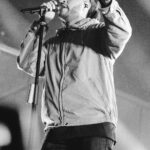


How did Oliver Tree build this fortune?
The answer unfolds through the career, earnings, deals and assets behind the headline estimate.
Oliver Tree before the fame
The background and early turning points that shaped Oliver Tree’s route to prominence.
Oliver Tree Nickell was born on 29 June 1993 in Santa Cruz, California. He was a sponsored competitive scooter rider as a teenager before an injury pushed him towards music, and he went on to study at the California Institute of the Arts. The combination of extreme-sports showmanship and art-school conceptualism explains almost everything about his later work.
Tree released electronic material under other names through his teens and early twenties. The turning point was the persona: bowl haircut, oversized windbreaker, enormous trousers and a permanently aggrieved expression. When I’m Down, made with the producer Whethan in 2016, was the first record to travel, and it earned him a deal with Atlantic Records the following year.
Oliver Tree’s breakthrough years
The career decisions and defining moments that turned recognition into sustained earning power.
The EP Alien Boy in 2018 established both the sound and the joke, which was that it was never entirely clear where the joke ended. Ugly Is Beautiful, released in 2020, entered the Billboard 200 at number 14 and topped both the Top Rock Albums and Alternative Albums charts (the label’s chart announcement, Billboard’s Alternative Albums chart), and was announced as his retirement from music – a retirement he then repeatedly and publicly reversed. Life Goes On the following year became a substantial streaming hit, reached the Hot 100 and gave him an audience well beyond the internet-native one he had built (Billboard’s chart history).
His catalogue accumulated several billion audio streams across platforms, led by Life Goes On, Miss You with Robin Schulz, Alien Boy, Hurt and Cash Machine. On our estimate roughly six billion streams at a blended rate near 0.4 cents produced about 24 million dollars of recorded-music revenue, of which an artist on a major-label deal typically keeps a fifth to a quarter: five to six million dollars to him from recordings, before his songwriting share.

What Oliver Tree’s work can earn
Reported pay, contracts, royalties and performance income reveal how the fortune was funded.
He was one of the genuinely original figures of his musical generation, and the scale of what he built is easy to underrate because he spent a decade insisting nobody take him seriously. He released four studio albums, including Cowboy Tears in 2022 and Alone in a Crowd in 2023, toured internationally at theatre and festival scale, and directed nearly all of his own videos – a decision that was as much commercial as artistic, keeping production control and value on his side of the ledger.
Touring was likely his largest single income source. On our estimate some 250 headline dates between 2018 and 2025 at an average gross of 80,000 dollars produced around 20 million dollars at the box office, of which perhaps 30 per cent reached him after production, agents and crew – roughly six million dollars – with merchandise adding one to two million more. Add a co-writer’s share of publishing on those streams, worth one to two million, and his gross earnings from music across the whole career land at 12 to 18 million dollars, our estimate throughout.
Tree’s recognition came from the audience rather than the academy: no Grammy nomination, but chart-topping albums, festival slots at Lollapalooza and Reading and Leeds, and a video catalogue watched more than a billion times. He died on 14 June 2026 in Rio de Janeiro, aged 32, when two helicopters collided in mid-air over the Recreio dos Bandeirantes neighbourhood; five others were killed, among them the Argentine YouTuber Gaspi, the director Lucas A. Vignale, the Brazilian producer Lucas Frota and both pilots (Variety, NBC News). The tributes that followed, from collaborators and from artists who had privately admired the work behind the act, were the clearest measure of his standing (NBC News).

Oliver Tree’s business beyond the main career
Endorsements, ownership interests and investments can keep compounding long after the initial breakthrough.
Brand work sat awkwardly with an act built on refusing to be sincere, and Tree took very little of it. His scooter background produced early equipment sponsorships of the kind that supply product rather than cheques, and later tie-ins were one-off collaborations rather than contracts. Sponsorship contributes nothing material to the figure below.
The business was the persona, and he ran it like a small studio. Directing and producing his own videos meant the production budgets that most artists hand to outside companies stayed within his own operation, and the constant stunts – the feuds, the retirements, the public arguments with his label – were marketing conducted at almost no cost. Merchandise built around the windbreaker and the scooter was a consistent seller on tour. The ventures are best understood as margin recovered from the music rather than a business standing apart from it.

Oliver Tree’s notable luxury item
A reported property or major asset offers a tangible glimpse of the wealth behind the public estimate.
Tree lived and worked in Los Angeles, and no property purchase or sale at a reported price has been attached to his name. The assets that matter are the ones a self-directing musician accumulates: the master recordings held by his label with his royalty attached, his songwriting copyrights, a large owned video catalogue, and production equipment. His estate’s position is being settled after his death, and the catalogue is the part of it with lasting value.
Oliver Tree’s estimated net worth
Public estimates vary because private contracts, investments, taxes and liabilities are not fully disclosed.
How this estimate is calculated
The documented facts are the chart placings – a number 14 entry on the Billboard 200 and number one on the Top Rock and Alternative Albums charts (the label’s chart announcement) – four studio albums, international touring at mid-size venue scale, and a catalogue that accumulated several billion streams (Billboard’s chart history). No contract, royalty statement or tour settlement is public, so every money figure here is our estimate, built from that activity and from standard industry rates.
Recordings: six billion streams at a blended 0.4 cents gives about 24 million dollars of revenue; an artist share of 20 to 25 per cent gives five to six million. Publishing: a co-writer’s share of the songwriter royalty on the same streams gives one to two million. Touring: 250 dates at an average 80,000 dollar gross gives 20 million, and a 30 per cent artist take gives six million. Merchandise adds one to two million. Gross music earnings therefore total 12 to 18 million dollars, and that assumes a conventional major-label split and thin touring margins; a more favourable deal would push the figure higher.
What he kept is less. Federal and California tax at these levels takes around 45 per cent, management and agents a further 15 to 20 per cent, and his elaborate self-funded productions consumed margin most artists never spend. Retained earnings of roughly four to seven million dollars, plus the residual value of the catalogue and video library he controlled, produce the range below. The oddity of his case is that the asset most likely to appreciate is the one he spent ten years pretending was a joke.
The working supports a range of $4 million to $8 million. The figure we publish is its midpoint.
Confidence: Indicative — chart positions and touring scale are documented, but the range rests on modelled streaming, touring and label-split assumptions rather than any published figure about his own money.
Think you know Oliver Tree? Take the quiz: Easy · Medium · Legendary
His public image was a decade-long performance; colleagues who described the private man – meticulous, generous, far more serious about craft than the bowl haircut suggested – sounded as if they were revealing a secret. He supported mental-health causes among younger fans without attaching his name to a foundation, and much of his charity was the informal kind, paying crews well and bringing collaborators along on tour.
Most of the controversy attached to Tree was staged by Tree. The feuds with other artists, the retirement announcements, the public complaints about Atlantic and the occasional stunt injury were engineered for attention and generally worked. The genuine scrutiny came at the end: the collision that killed him is the subject of a Brazilian aviation investigation into how two helicopters carrying a film crew came to occupy the same airspace (NBC News).