 How Much Are They Worth?
Celebrity fortunes, explained
How Much Are They Worth?
Celebrity fortunes, explained
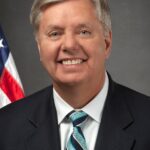

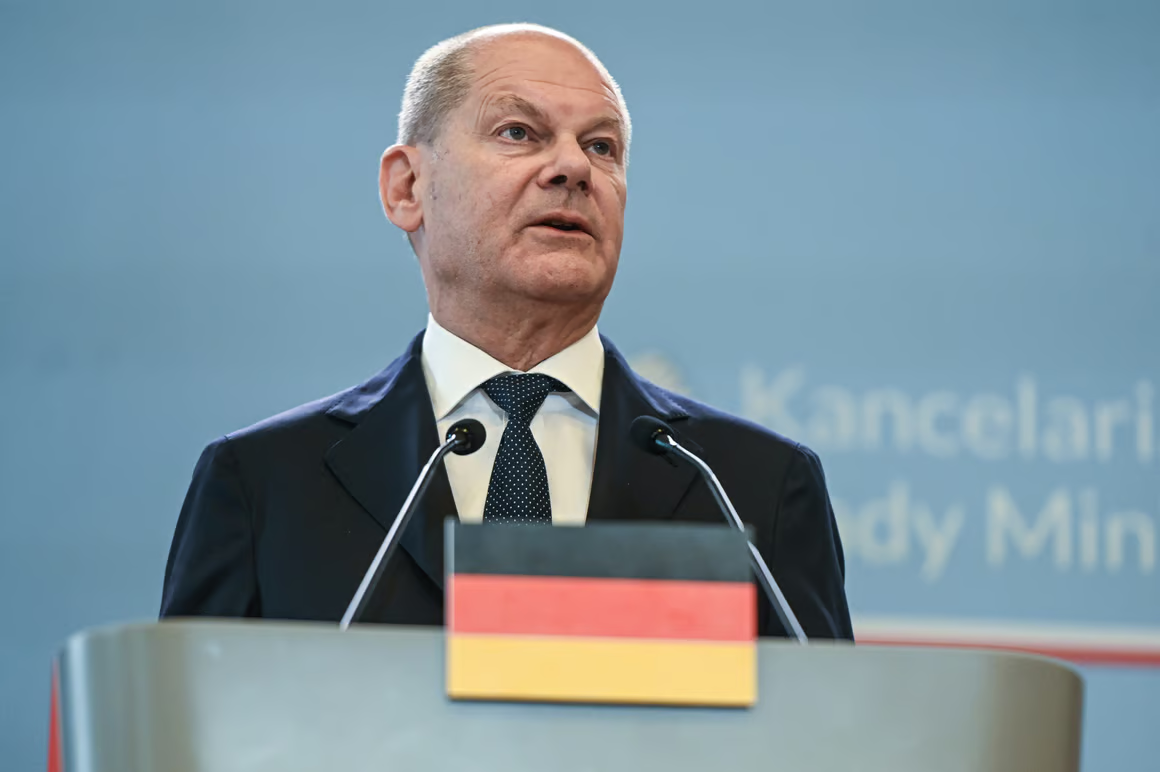
How did Olaf Scholz build this fortune?
The answer unfolds through the career, earnings, deals and assets behind the headline estimate.
Before the fame
The background and early turning points that shaped Olaf Scholz’s route to prominence.
Olaf Scholz was born in Osnabrück in 1958 and grew up in Hamburg. He joined Germany’s Social Democratic Party as a teenager, studied law at the University of Hamburg and completed civilian service in a care facility. The Bundestag biography of Olaf Scholz records that he qualified in 1984 and began practising as a lawyer in 1985, specialising in labour law.
Scholz’s career spans private legal practice and more than three decades in party and public office. He is married to fellow SPD politician Britta Ernst. Their shared political prominence does not make either spouse’s salary or property wholly attributable to the other, a distinction that matters when estimating personal wealth.
Scholz rose through the Young Socialists, serving as a deputy federal chairman, and built a legal practice focused on employment matters. He first entered the Bundestag in 1998. After a brief period as Hamburg’s interior senator, he returned to federal Parliament and became SPD general secretary under Chancellor Gerhard Schröder.
He later served as the SPD parliamentary group’s chief whip and, from 2007 to 2009, federal labour and social affairs minister. These posts established his reputation as a disciplined administrator. They also produced well-documented professional income, but not the equity upside associated with founding a large corporation.
The breakthrough years
The career decisions and defining moments that turned recognition into sustained earning power.
Scholz’s major executive breakthrough came in Hamburg. He led the SPD to victory in the 2011 state election and served as the city’s first mayor until 2018. He then joined Angela Merkel’s final coalition government as finance minister and vice chancellor, placing him at the centre of Germany’s fiscal response to the pandemic.
The SPD nominated him for chancellor in 2020 despite his earlier loss in the party-leadership contest. After the 2021 election, he assembled a coalition with the Greens and Free Democrats. The Federal Chancellery’s account of the Scholz government confirms that he served as Germany’s ninth federal chancellor from 2021 to 2025, while the Bundestag record of his election as chancellor documents the parliamentary vote.

What the work can earn
Reported pay, contracts, royalties and performance income reveal how the fortune was funded.
As finance minister, Scholz helped design extensive pandemic support and backed the European recovery fund. As chancellor, he introduced the “Zeitenwende,” a major shift in defence and security policy after Russia’s invasion of Ukraine. The government created a special fund for the armed forces, supplied Ukraine and sought alternatives to Russian energy. NATO’s published remarks from Scholz’s March 2022 visit show how he presented that policy change to Germany’s allies.
His coalition also enacted a higher statutory minimum wage, accelerated renewable-energy policy and reformed citizenship rules. These are public-policy achievements, not personal commercial assets. The government programmes and defence fund he announced belong to the German state and cannot be counted toward his wealth.
Scholz became internationally recognisable as the successor to Angela Merkel, although his restrained communication style earned him the nickname “Scholzomat.” His understated persona and reputation for remembering few details under questioning have been recurring features of German political coverage.
His period as chancellor ended after the coalition collapsed and the SPD recorded its worst post-war federal-election result. The Associated Press report on the 2025 German election records the SPD’s defeat and the conservative bloc’s victory. Friedrich Merz formally replaced Scholz in May 2025, as documented in Reuters’ report on Merz’s election as chancellor.

The business beyond the main career
Endorsements, ownership interests and investments can keep compounding long after the initial breakthrough.
German political culture does not typically produce consumer endorsement portfolios for serving chancellors, and Scholz is not known for paid brand promotion. Appearances at business conferences, party events and international summits were part of his official or political work.
Travel, accommodation, staff support and security funded for state duties are not compensation he can retain. Similarly, media exposure has reputational value but no defensible cash value unless a contract establishes payment. The estimate therefore assigns nothing for supposed sponsorships.
Scholz worked as a labour lawyer before his senior political career, but there is no evidence that he owns a major law firm, industrial company or technology venture today. His economic influence as finance minister and chancellor should not be mistaken for equity ownership in the companies affected by government policy.
No verified public record supports attributing corporate revenue, SPD funds or government assets to him. If he later undertakes paid speaking, writing or advisory work, only disclosed personal receipts should enter a calculation. Potential future earning power is not the same as an existing asset.

Notable luxury item
A reported property or major asset offers a tangible glimpse of the wealth behind the public estimate.
Scholz and Ernst have been publicly associated with a home in Potsdam and previously lived in Hamburg. Market estimates for an area do not establish their equity, ownership split or mortgage balance. Household assets may be shared, so it would be inaccurate to place their entire value on Scholz’s personal ledger.
Germany publishes outside-income and parliamentary information, but not a comprehensive audited personal balance sheet for every politician. The Bundestag’s current member page for Scholz identifies his profession and public career without establishing a complete portfolio. The Federal Chancellery, official vehicles and official residences were state property.
Olaf Scholz’s estimated net worth
Public estimates vary because private contracts, investments, taxes and liabilities are not fully disclosed.
How this estimate is calculated
The estimate begins with Scholz’s long history of paid work as a lawyer, parliamentarian, Hamburg mayor, federal minister and chancellor. It allows for saving and investment over several decades but also for German taxation, ordinary living expenses and potentially shared property. Official salary schedules provide a more rational basis than unsourced celebrity-finance websites.
No value is assigned to government residences, security, party resources or policy budgets. The method also avoids assuming that decades of gross salary remain intact. Because private savings, pensions, property debt and jointly held investments are not fully public, the result is expressed as a broad, cautious range.
Olaf Scholz’s estimated net worth is approximately €3 million to €6 million. The figure is an evidence-informed estimate rather than an audited disclosure. It reflects a long legal and senior-government career, possible residential equity and accumulated pension or investment rights, reduced for taxes, spending, shared ownership and unknown liabilities. The public record does not support the much larger fortunes sometimes assigned to prominent leaders merely because they controlled large state budgets.
Scholz has supported social-democratic causes through policy, including labour protections and welfare measures, but public expenditure is not personal philanthropy. There is no well-documented private foundation controlled by him that should be treated as an individual asset.
His public image combines administrative competence with perceived caution. That reputation helped him campaign as a stable successor to Merkel in 2021 but became a liability amid economic stagnation and coalition conflict. Neither approval nor unpopularity is a reliable proxy for personal wealth.
Scholz faced repeated questioning about the Cum-Ex tax scandal and meetings held while he was Hamburg mayor with shareholders of Warburg Bank. He denied improper intervention. A Reuters account of his parliamentary testimony on Cum-Ex describes the scrutiny and his rejection of wrongdoing.
He was also criticised over the Wirecard collapse during his period as finance minister, the pace of military aid to Ukraine and the management of his coalition. The coalition fractured after he dismissed finance minister Christian Lindner. The Bundestag record of the December 2024 confidence vote documents the formal loss of confidence that led toward the early election. These controversies concern governance; none supplies evidence of personal illicit enrichment.