
 How Much Are They Worth?
Celebrity fortunes, explained









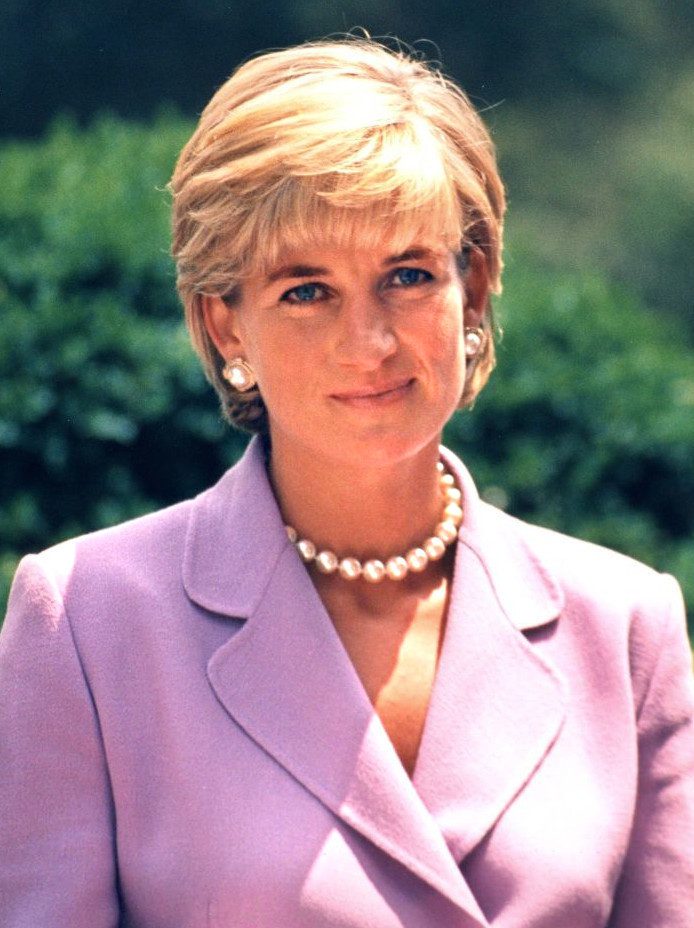
How did Princess Diana build this fortune?
The answer unfolds through the career, earnings, deals and assets behind the headline estimate.
Princess Diana before the fame
The background and early turning points that shaped Princess Diana’s route to prominence.
Diana Frances Spencer was born on 1 July 1961 in Norfolk and married Charles, then Prince of Wales, at St Paul’s Cathedral on 29 July 1981. The couple separated in December 1992 and were divorced on 28 August 1996 (The Royal Family). She died on 31 August 1997 following a car crash in Paris.
Unusually for a royal figure, the essentials of her finances are documented rather than estimated, because her will went to probate and the figures were reported at the time. Almost everything below rests on that grant and the court order that followed it.
She had no profession before 1981 and no fortune of her own. What the rest of the world would call a career began with the marriage: a full public diary, a household to run and, within a few years, patronage of more than a hundred organisations.
It was unpaid work in the ordinary sense. Members of the royal family draw no salary, and her income before the divorce came through the Prince of Wales’s household rather than in her own right.
Princess Diana’s breakthrough years
The career decisions and defining moments that turned recognition into sustained earning power.
The turn that defined her came in the second half of the 1980s, when she began taking on causes others in public life were avoiding. Her work alongside people affected by HIV and AIDS, at a point when the illness carried enormous public stigma, changed what a royal patronage could be used for; she was patron of the National AIDS Trust and, for eight years, president of the Royal Marsden Hospital (The Royal Family).
It established a style of public work – direct, physical, unhedged – and it is why her name still raises money nearly thirty years later.

What Princess Diana’s work can earn
Reported pay, contracts, royalties and performance income reveal how the fortune was funded.
In January 1997 she visited Angola as part of her campaign against anti-personnel landmines and walked through a minefield being cleared by The HALO Trust (The Royal Family, The HALO Trust USA). The effect was measurable in policy rather than money: the charity’s own account records that the landmine issue reached international prominence with that visit, and that the Ottawa Mine Ban Treaty was signed by 122 countries shortly afterwards (The HALO Trust). Among her final engagements, in August 1997, was a visit to landmine projects in Bosnia.
None of that work paid her, which is what makes her finances unlike anyone else’s on this site. Her own money arrived in two documented events, and they total between £13 million and £21 million. The first was the divorce settlement of August 1996, reported at the time at 28.7 million dollars plus interest – on the order of £17 million – together with an annual sum to run her private office (TIME). The second was probate: her estate was valued at £21 million a year later, of which more than £8 million went in inheritance tax, leaving around £13 million for her two sons (CNN). Those two figures are the whole story of her wealth, and they are the range below.
The day after her divorce she resigned from more than a hundred patronages and kept six: Centrepoint, English National Ballet, The Leprosy Mission and the National AIDS Trust as patron, and Great Ormond Street and the Royal Marsden as president (The Royal Family).
Rather than spread a diminished royal title across a hundred letterheads, she concentrated it on six organisations, and each was left with a national profile it had not had before.

Princess Diana’s business beyond the main career
Endorsements, ownership interests and investments can keep compounding long after the initial breakthrough.
She never took a commercial endorsement, and the position she occupied before 1996 would not have allowed one. No brand has ever been able to say she was paid to be associated with it.
The closest thing to a commercial use of her image was the sale of her wardrobe, and she gave the proceeds away: in June 1997 almost eighty dresses went through Christie’s, raising more than 3.2 million dollars for cancer and AIDS charities (CNN).
There were none. She founded no company, held no directorships and licensed nothing; the commercial category is simply empty.
That matters for the estimate: unlike most other profiles on this site, there is no private business whose valuation has to be guessed at.

Princess Diana’s notable luxury item
A reported property or major asset offers a tangible glimpse of the wealth behind the public estimate.
It is easy to overstate what she owned. Her apartments at Kensington Palace were grace-and-favour accommodation rather than property, and Althorp belongs to the Spencer estate and passed to her brother. Neither was ever hers to sell.
What she actually held was the divorce settlement, her jewellery and her personal effects, and that is what probate valued. The market for those effects has since grown far beyond their 1997 worth – one dress sold for close to 1.15 million dollars in 2023 (NPR) – but that value accrued after her death and to other owners, not to her estate.
Princess Diana’s estimated net worth
Public estimates vary because private contracts, investments, taxes and liabilities are not fully disclosed.
How this estimate is calculated
Where the money came from. The 1996 settlement is the source of almost all of it: TIME, November 1997 reported it at the time as 28.7 million dollars plus interest, alongside an annual allowance to run her private office, and noted that she had previously put her own wealth at a fraction of that. She received no continuing income from the Duchy of Cornwall or the Sovereign Grant after the marriage ended.
Documented. Her will, dated 1 June 1993 with a 1996 codicil, naming her mother Frances Shand Kydd and her sister Lady Sarah McCorquodale as executors; and the probate figure of an estate worth £21 million, or about 35 million dollars (CNN).
The arithmetic. Take the £21 million estate, apply inheritance tax at 40 per cent, and the contemporaneous report is that more than £8 million went in tax, leaving around £13 million for her two sons. Split after legacies, that is on the order of £6 to £7 million each at 1997 values. In December 1997 the executors obtained a court order altering the timing her will had set: the princes would receive capital at 30 rather than 25, with trust income from 25 (Forbes). William drew a reported £250,000 a year from 25 (CNN) and Harry about £300,000, and each is reported to have received something over £10 million on turning 30 – consistent with fifteen years of growth on a smaller starting share.
A figure to treat carefully. A net estate of about £17 million after tax is widely repeated, and it does not reconcile with the reporting above. Both cannot be right, and the 1997-98 accounts sit closer to the grant than the later round numbers do, so the band below is drawn from them. Diana is the rare subject here whose money needs no modelling at all: a court fixed one number and a probate registry fixed the other, and everything between them is simply the tax.
The working supports a range of £13 million to £21 million. The figure we publish is its midpoint.
Confidence: Documented — the upper figure is the probate valuation at her death in August 1997 and the lower is what contemporaneous reporting says passed to the trust after inheritance tax.
Think you know Princess Diana? Take the quiz: Easy · Medium · Legendary
The Christie’s sale is the clearest single act of personal giving on her record: she sold her own clothes and directed the money to cancer and AIDS charities, among them the Royal Marsden (CNN). The idea is generally credited to her elder son.
Two things are often merged and should not be. The Diana, Princess of Wales Memorial Fund was a separate registered charity that raised and distributed money in her name after 1997; it was never part of her personal estate, and its money stays out of the estimate below.
The most significant matter on the public record is not about her conduct but about how she was treated. Her 1995 Panorama interview with Martin Bashir was re-examined by Lord Dyson at the BBC’s request, and his 2021 report found that Bashir had used deceitful behaviour, including commissioned fake bank statements, to obtain an introduction to her, in serious breach of the corporation’s producer guidelines (Deadline).
The report also criticised the BBC’s own 1996 internal inquiry into the mocked-up documents, and the findings were debated in the House of Lords the following week (Hansard, House of Lords).