 How Much Are They Worth?
Celebrity fortunes, explained
How Much Are They Worth?
Celebrity fortunes, explained

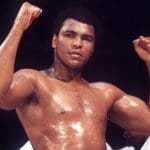




How did Aaron Pryor build this fortune?
The answer unfolds through the career, earnings, deals and assets behind the headline estimate.
Aaron Pryor before the fame
The background and early turning points that shaped Aaron Pryor’s route to prominence.
Pryor was born on October 20, 1955, in Cincinnati, Ohio, and stood 5 feet 6 inches tall with a 69-inch reach, an unusually long reach for a fighter his height that became part of what made his swarming style so hard to solve (Wikipedia). He fought out of an orthodox stance and took the nickname “The Hawk” for the way he attacked opponents in sustained, unrelenting flurries rather than picking his shots (Wikipedia). Cincinnati remained the center of his life throughout, and he returned to the city’s gyms and churches for the final decades of his life after his career and recovery were complete (Andscape).
Pryor built one of the most decorated amateur resumes in American boxing, finishing with a 204-16 record in 220 fights, winning the National AAU Lightweight Championship in both 1973 and 1975, and taking a silver medal at the 1975 Pan American Games (Wikipedia). At the 1976 National Golden Gloves he beat future all-time great Thomas Hearns in the lightweight final, and in 1974 he defeated three future world champions, Vassily Solomin, Valery Lvov and Valery Rachkov, during a USSR versus USA amateur dual meet, though a loss to Howard Davis Jr. at the 1976 Olympic Trials kept him off that year’s Olympic team (Wikipedia). He turned professional on November 11, 1976, with a second-round knockout of Larry Smith for a purse of just $400, fighting under a managerial contract with Cincinnati pizzeria owner Buddy LaRosa (FloCombat).
Aaron Pryor’s breakthrough years
The career decisions and defining moments that turned recognition into sustained earning power.
Pryor’s breakthrough came on August 2, 1980, when he knocked out reigning champion Antonio Cervantes in four rounds to win the WBA light welterweight title for a purse of $50,000, a massive jump from his $400 professional debut just four years earlier (Wikipedia). He defended the title repeatedly through the early 1980s while building an unbeaten record, setting up the fight that would define his career: a showdown with three-division champion Alexis Arguello, who was chasing a fourth divisional title and was widely regarded as one of the best pound-for-pound fighters alive (The Fight City).

What Aaron Pryor’s work can earn
Reported pay, contracts, royalties and performance income reveal how the fortune was funded.
On November 12, 1982, before more than 23,000 fans at the Miami Orange Bowl, Pryor stopped Arguello in the 14th round of a fight promoter Bob Arum called “one of the most memorable fights I ever did,” earning purses of $1.6 million to Arguello’s $1.5 million in a bout Ring magazine later named Fight of the Decade (ESPN). The rematch followed on September 9, 1983, at Caesars Palace in Las Vegas, where Pryor dropped Arguello twice and stopped him in the 10th round for a career-high purse of $2.25 million against Arguello’s $1.75 million (Wikipedia). He went on to win the IBF light welterweight title in 1984 and retired with a professional record of 39 wins in 40 fights, 35 of them by knockout (Wikipedia).
Pryor was named Fighter of the Year by the Boxing Writers Association of America in 1982, the year of the first Arguello fight, and was inducted into the International Boxing Hall of Fame in 1996 (Wikipedia). That same year he published his autobiography, “Flight of the Hawk,” co-written with Marshall Terrill, in which he revisited the controversy around the first Arguello fight and his own account of the years that followed (Boxing News Online). In 1999 the Associated Press voted him the greatest light welterweight of the 20th century, and he was later voted the greatest light welterweight in boxing history by the Houston Boxing Hall of Fame in 2014 (Wikipedia).
Aaron Pryor’s business beyond the main career
Endorsements, ownership interests and investments can keep compounding long after the initial breakthrough.
No endorsement or sponsorship deal tied to Pryor was found in the sourcing for this profile. Boxing in the early 1980s rarely carried the personal brand sponsorships common in the sport today, and a champion’s income in that era came almost entirely from fight purses and a promoter-negotiated split of gate and closed-circuit television revenue rather than outside endorsement deals; his own two Arguello purses illustrate how concentrated that income was in a handful of marquee nights rather than steady commercial partnerships (Wikipedia).
No publicly documented company, ownership stake or commercial venture outside boxing was found in the sourcing for this profile. After achieving sobriety in 1993, Pryor’s working life centered on the sport that made him famous: he trained amateur and professional fighters in gyms around Cincinnati, most notably mentoring a teenage Adrien Broner, who went on to become a multi-division world champion himself (Andscape). Beyond training fees, his income in his later years came from selling personal boxing memorabilia and from appearances on the motivational speaking circuit, where he told his own story of rise, collapse and recovery (Andscape).

Aaron Pryor’s notable luxury item
A reported property or major asset offers a tangible glimpse of the wealth behind the public estimate.
No reliable public record of real estate holdings, vehicles or other major personal assets tied to Pryor exists in the sourcing for this profile. The one specific property that does appear in his story is a house he owned in Miami during the mid-1980s, which became notorious in his own retelling not as an investment but as the site of extended drug binges during the worst years of his cocaine addiction (Andscape). By the time of his death in 2016 he was living in the Cincinnati area, the city where he had trained and worshipped for decades, rather than any property tied to his championship years (Legacy.com).
Aaron Pryor’s estimated net worth
Public estimates vary because private contracts, investments, taxes and liabilities are not fully disclosed.
How this estimate is calculated
Pryor’s documented purses show real, substantial peak earnings: $50,000 to win his first title in 1980, then $1.6 million and a career-high $2.25 million for his two fights with Arguello alone in 1982 and 1983, on top of other title-fight purses across a 40-fight professional career (Wikipedia). That peak has to be weighed against equally well-documented reporting on what happened next: a cocaine addiction that took hold within a year or two of his biggest payday and dominated the following decade, bringing arrests, a court-ordered treatment program and jail time rather than further multi-million-dollar purses (Wikipedia). His income after achieving sobriety in 1993 came from gym trainer’s fees, memorabilia sales and speaking engagements rather than a return to championship-level earnings, and boxing in his era had no pension system to preserve what a fighter made in his prime (Andscape). Given that documented arc from a multi-million-dollar peak through a financially and personally destructive addiction to a modest, stable but non-lucrative final act as a trainer and church deacon, a modest estate estimate is most consistent with the facts. A handful of low-quality online aggregators list wildly different, unsourced figures for Pryor ranging from roughly $1 million to as high as $15 million with no disclosed methodology; those numbers are treated here only as a rough, secondary cross-check and are not the basis for this estimate.
No dedicated charitable foundation tied to Pryor was found in the sourcing for this profile, but his post-recovery public image rested heavily on community and church work. He was ordained a deacon, and later became an associate minister, at New Friendship Baptist Church in Cincinnati, and in 2000 he was formally honored for community service in both Kentucky and Cincinnati (Andscape). Those close to him described smaller, informal acts as well, including regularly taking neighborhood children out for ice cream, and he stayed close to former rival Alexis Arguello after both men retired, even traveling to Nicaragua to support Arguello’s later political career (Boxing News Online).
Pryor’s first major controversy came inside the ring: during the 14th round of the first Arguello fight, HBO’s microphones picked up his trainer, Panama Lewis, telling a cornerman to hand him “the other bottle, the one I mixed,” and Arguello’s camp filed an official protest with the WBA alleging Pryor had been given an illegal substance between rounds (ESPN). Far more serious and lasting was his battle with cocaine, which began not long after his second fight with Arguello in 1983 and consumed much of the following decade; he was arrested in Cincinnati in 1989 with cocaine paraphernalia in his car, ordered into a two-year drug treatment program in 1990, and later served three months in jail following a 1991 arrest, while his own account describes being shot during a drug-related abduction at the low point of his addiction (Wikipedia). Pryor finally achieved lasting sobriety in 1993, a turning point his family has credited to a hospital warning that continued drug use would kill him and to the support of his wife, Frankie, herself a recovering addict he met in treatment, and he remained clean for the rest of his life (Andscape). This profile treats that addiction and recovery as a documented and historically significant part of Pryor’s public record, not as a footnote to his ring career.