 How Much Are They Worth?
Celebrity fortunes, explained
How Much Are They Worth?
Celebrity fortunes, explained



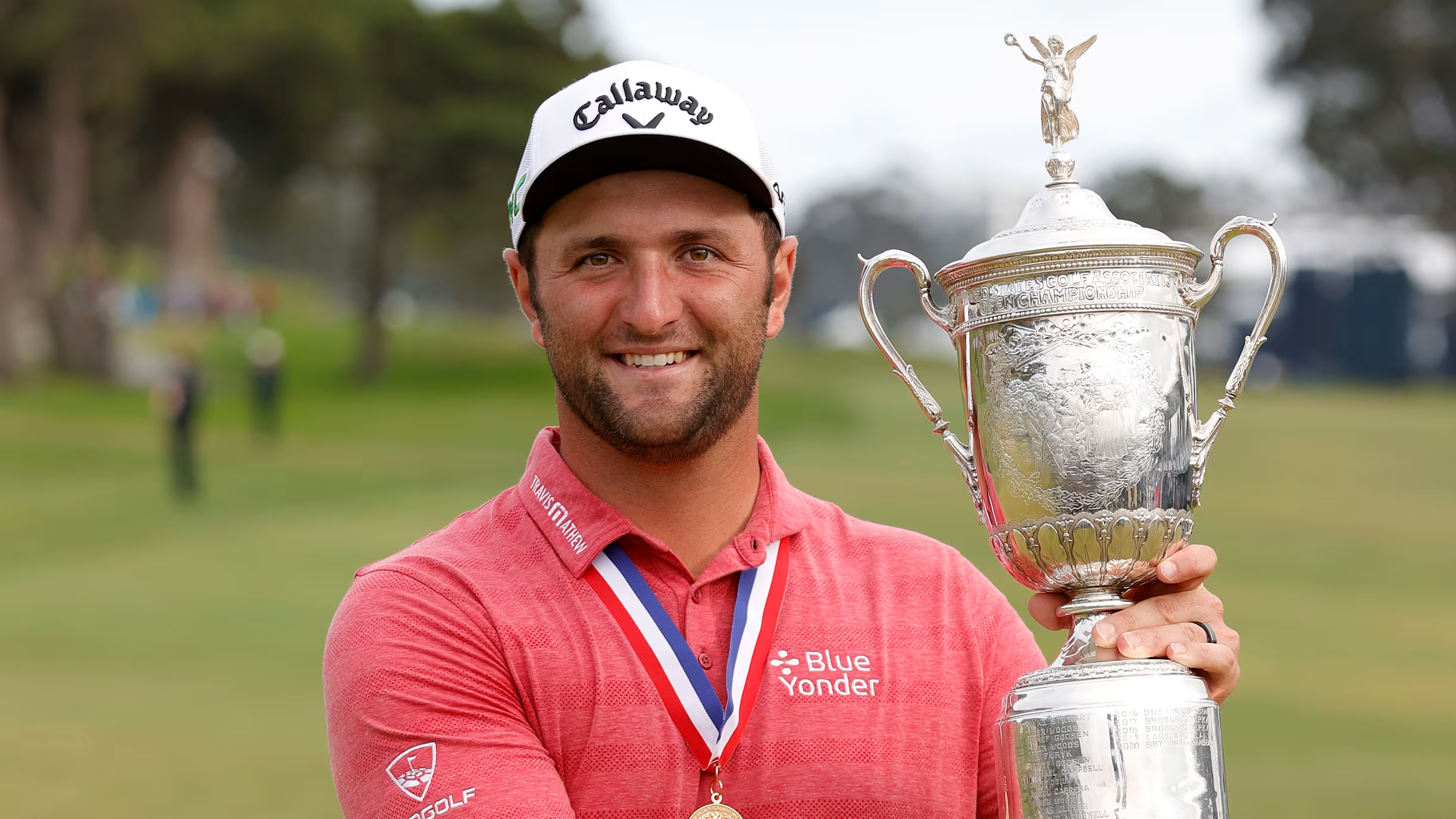
How did Phil Mickelson build this fortune?
The answer unfolds through the career, earnings, deals and assets behind the headline estimate.
Before the fame
The background and early turning points that shaped Phil Mickelson’s route to prominence.
Phil Mickelson is a six-time major champion and one of golf’s highest career earners. That distinction matters financially because the subject’s earning history is tied to identifiable events, rights and businesses rather than a generic assumption about what a successful golf figure should be worth. This profile treats reported compensation as evidence, not as cash automatically retained.
Mickelson won on the PGA Tour as an amateur at the 1991 Northern Telecom Open, then built a record eventually spanning 45 Tour victories.
Mickelson won the 1991 Northern Telecom Open while still an Arizona State amateur, so his PGA earning power was evident before he could accept professional prize money. The Masters career record shows how his Augusta results later became central to the brand: victory in 2004 ended his wait for a major, followed by wins in 2006 and 2010. HMW assigns the amateur win no cash and uses early professional prize tables at their historical amounts. The financial inflection is the sustained television profile that supported decades of sponsor income, not an imaginary modern purse attached to old victories.
The breakthrough years
The career decisions and defining moments that turned recognition into sustained earning power.
The decisive professional breakthrough was his first PGA Tour victories while still young. It expanded audience, negotiating leverage and access to premium events. A breakthrough can create future earning capacity, but the estimate does not capitalize fame by itself; only documented compensation, durable rights and identifiable commercial activity are given financial weight.
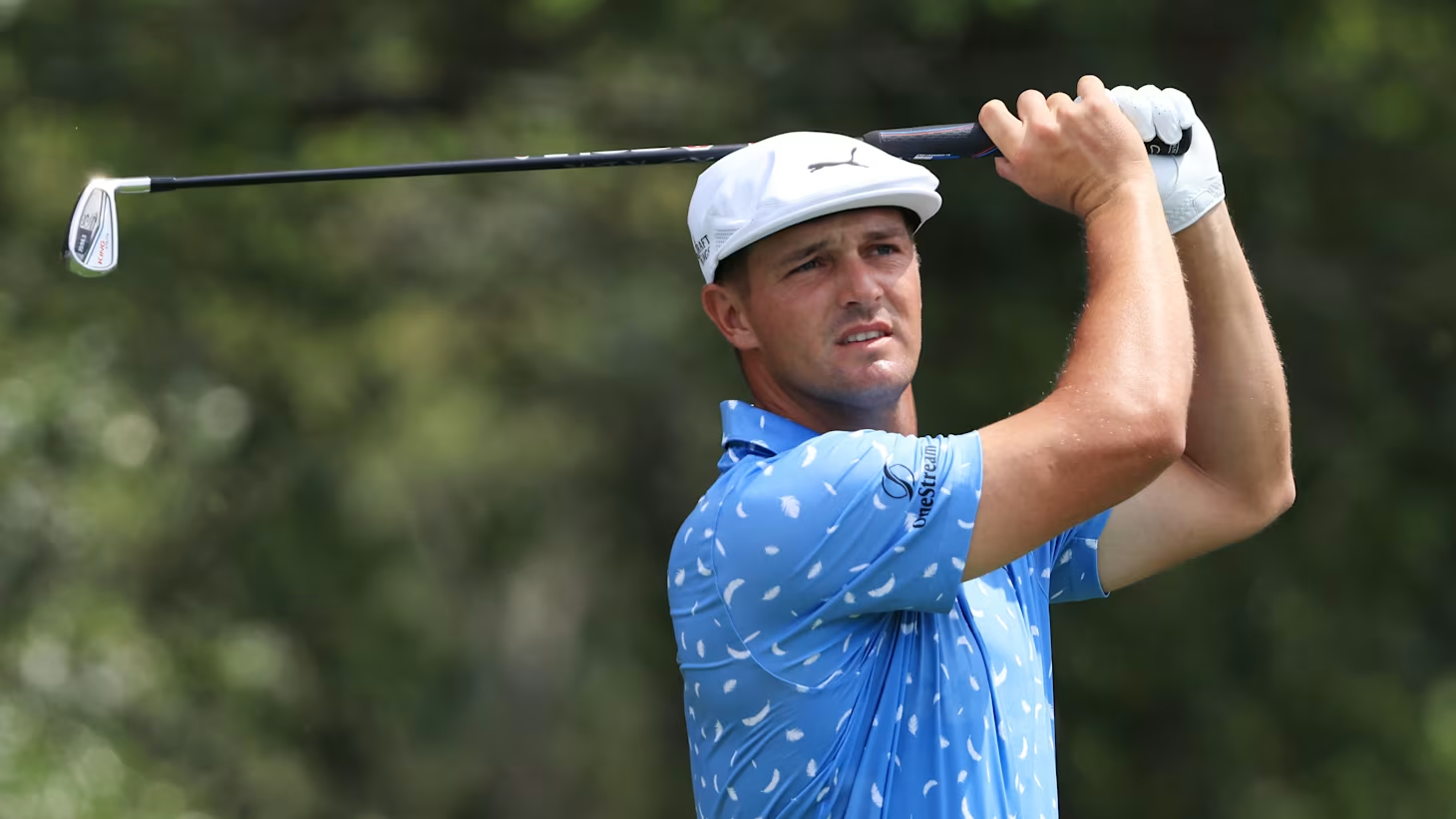
At Kiawah Island in 2021 he became, at 50, the oldest men’s major winner, a commercially valuable late-career achievement rather than merely another start.

What the work can earn
Reported pay, contracts, royalties and performance income reveal how the fortune was funded.
Major milestones include three Masters wins, the 2021 PGA Championship and his move to LIV Golf. The sequence is important because title bouts, major wins and headline events typically carry higher direct compensation and stronger sponsorship value. Career records also prevent double-counting widely repeated purse or prize reports that refer to the same event. Not every milestone receives a separate dollar value: several are used only to confirm the period in which income and commercial leverage peaked.
The PGA Tour career table records roughly $96.7 million of official money, but excludes decades of endorsements, bonuses and LIV compensation.
The principal income channels were prize money, endorsements, appearance economics and LIV compensation. Public prize, purse or compensation reports are gross figures. They precede promoter or tour deductions, management, coaching and training costs, travel, taxes and personal spending, so the calculation applies substantial retention discounts rather than simply adding headlines.
His reported LIV headline has commonly been described as $200 million, but no public contract establishes schedule, conditions, equity, clawbacks or net receipts.

The business beyond the main career
Endorsements, ownership interests and investments can keep compounding long after the initial breakthrough.
Mickelson’s long-running commercial roster included Callaway, KPMG, Rolex and financial-services campaigns, but several relationships ended around his move to LIV. HMW therefore does not project his peak endorsement rate indefinitely. It also incorporates the unusually relevant negative evidence in ESPN’s report on Billy Walters’ account, which alleged almost $100 million in gambling losses. That claim is not an audited ledger, so it is treated as a large risk-adjusted consumption deduction rather than subtracted with false precision; the reported amount wagered is not itself a loss.
Business interests include large disclosed earnings coexist with reported gambling losses and private liabilities. Where a private company has no audited accounts or transaction price, this profile does not assign it an aggressive speculative valuation. It recognizes only a restrained contribution consistent with the public evidence and separates operating-brand visibility from money owned personally.
KPMG publicly ended its sponsorship in 2022; that documented interruption is reflected rather than projecting peak endorsement income indefinitely.

Notable luxury item
A reported property or major asset offers a tangible glimpse of the wealth behind the public estimate.
Mickelson’s private balance sheet is unusually difficult to infer despite enormous gross earnings. The timing of LIV installments, any HyFlyers GC equity, sponsor terminations, gambling losses, tax exposure and investment performance are undisclosed. HMW includes retained financial assets after those drains but prices no LIV team stake and no unidentified real-estate portfolio. This approach allows his 45-win career and nine-figure commercial history to matter without assuming that every dollar survived decades of spending and risk.
Phil Mickelson’s estimated net worth
Public estimates vary because private contracts, investments, taxes and liabilities are not fully disclosed.
How this estimate is calculated
Mickelson’s model starts with $96.7 million in official PGA Tour money and reconstructs peak endorsement years from Forbes reporting. It adds only LIV installments reasonably elapsed by August 2026 plus separately reported tournament receipts, never the entire headline guarantee and an overlapping annual total. Tournament and sponsor cash loses caddie, agent, travel and management costs and a blended tax reserve; historical retained cash receives moderate investment growth. A substantial risk-weighted deduction reflects the reported gambling-loss order of magnitude and high lifetime consumption, without treating total betting turnover as money lost. Future LIV payments, HyFlyers equity and unsupported property claims receive zero. The resulting retention rate is far below that of a golfer with similar career gross but no comparable loss evidence.
Phil Mickelson developed a public profile extending beyond results. Major media and governing-body coverage shows sustained audience interest and a recognisable international brand. Reach can support licensing, appearances and sponsorship, although follower counts and publicity are not treated as personal assets without evidence of monetisation.
Forbes estimated $40 million of 2025 earnings and earlier explained that LIV guarantees are modeled as installments, not presumed all received on signing.
The PGA Tour provides a strong $96.7 million official-money floor, Forbes supplies annual estimates and explains the installment treatment of LIV guarantees, and the PGA Championship documents his late-career major. The weakest inputs are the reported $200 million LIV headline and Walters’ loss estimate, because neither comes with payment schedules or personal statements. HMW uses ranges internally, removes overlap between LIV prize money and Forbes totals, and applies the gambling evidence only once. Sponsor exits and private debts could move the result materially.