
 How Much Are They Worth?
Celebrity fortunes, explained
How Much Are They Worth?
Celebrity fortunes, explained


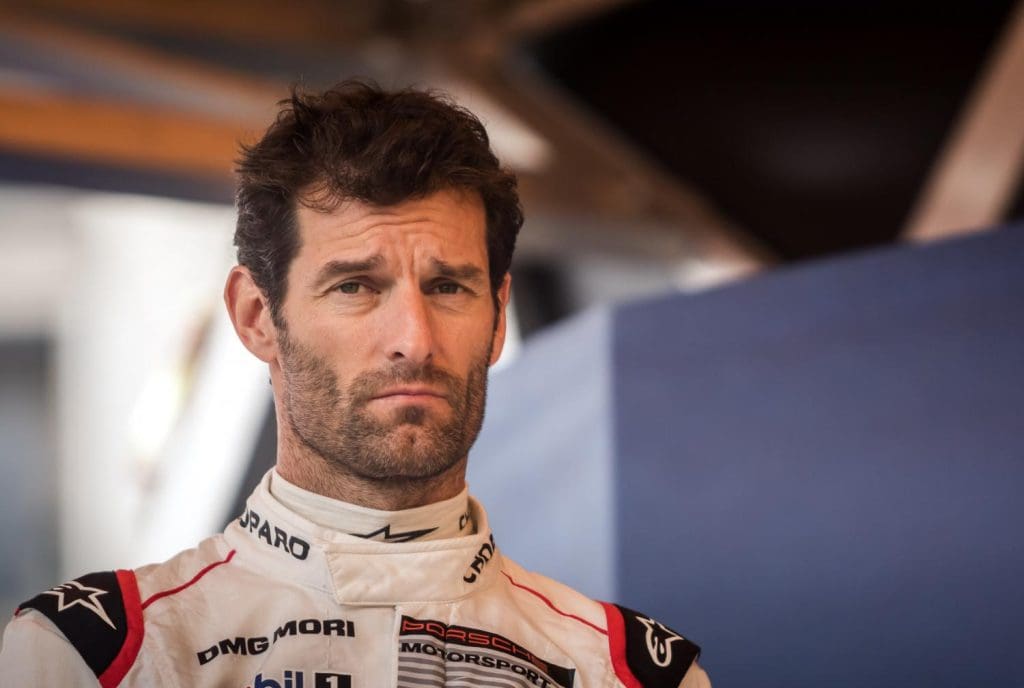
How did Mark Webber build this fortune?
The answer unfolds through the career, earnings, deals and assets behind the headline estimate.
Before the fame
The background and early turning points that shaped Mark Webber’s route to prominence.
Mark Alan Webber was born on August 27, 1976, in Queanbeyan, New South Wales, Australia, just across the border from the national capital, Canberra. His father, Alan Webber, ran a motorcycle dealership and petrol station, and his mother, Diane, worked alongside him in the family business. Webber has an elder sister, Leanne. He attended Isabella Street Primary School and Karabar High School, where he played rugby league, Australian rules football, cricket and athletics and competed in swimming before motor racing took over.
Webber’s father sold motorcycles rather than cars, but the family’s small-business, petrolhead environment put Webber around engines from an early age. He has said in interviews that karting was a relatively accessible entry point in regional New South Wales, and that his parents supported — without lavishly funding — his early races, a contrast to the more heavily backed junior careers of several of his future F1 rivals.
Webber began karting in Queanbeyan at age 14 in 1991, winning New South Wales and Australian junior titles before moving into cars. He raced in the Australian Formula Ford Championship in the mid-1990s, then relocated to the United Kingdom in 1996 to compete in British Formula 3 and Formula Ford, funding much of the early move himself with help from small sponsors rather than a wealthy backer.
His breakthrough came with Mercedes-Benz’s sportscar program. Webber finished runner-up in the 1998 FIA GT Championship, taking five wins for the AMG-Mercedes team alongside Bernd Schneider and Klaus Ludwig. In 1999 he was promoted to Mercedes’ new CLR Le Mans prototype — and was involved in one of endurance racing’s most notorious incidents, when his CLR became airborne and flipped during qualifying at Le Mans, and again during Saturday warm-up, both times at well over 200 km/h. Webber walked away unhurt on both occasions, but a third, near-identical flip during the race itself, suffered by teammate Peter Dumbreck, prompted Mercedes to withdraw its sportscar program entirely. Webber moved into single-seaters full time, finishing runner-up in the 2001 International Formula 3000 Championship with three wins for Alan Docking Racing — a result strong enough to earn him an F1 seat for 2002.
The breakthrough years
The career decisions and defining moments that turned recognition into sustained earning power.
Webber’s Formula One career ran from 2002 to 2013 across four teams. He debuted with Minardi at the 2002 Australian Grand Prix and scored points on his home debut for a team that rarely troubled the top ten, immediately marking him as a driver worth watching. He moved to Jaguar Racing for 2003-2004, then to Williams for 2005-2006, taking his first F1 podium at the 2005 Monaco Grand Prix. In 2007 he joined the newly competitive Red Bull Racing, where he spent the rest of his F1 career and became a genuine title contender alongside teammate Sebastian Vettel. Webber took his first Grand Prix win at the 2009 German Grand Prix and his last at the 2012 British Grand Prix, finishing his career with nine wins, 13 pole positions, 42 podiums and 1,047.5 championship points from 217 entries. He placed third in the World Drivers’ Championship in 2010, 2011 and 2013, and was part of Red Bull’s four consecutive Constructors’ Championship-winning line-ups from 2010 to 2013, a period marked by a well-documented internal rivalry with Vettel over team orders and equal treatment.
After leaving F1 at the end of 2013, Webber joined Porsche’s factory LMP1 program in the FIA World Endurance Championship, sharing a Porsche 919 Hybrid with Timo Bernhard and Brendon Hartley from 2014 to 2016. The trio won the 2015 WEC Drivers’ Championship with 166 points, and Webber finished second at the 24 Hours of Le Mans that same year, adding eight WEC race wins and 15 podiums before retiring from professional racing at the end of 2016. Since then he has built a multi-track post-driving career: he is a long-running Formula One broadcaster and analyst for Channel 4 in the UK and Network 10 in Australia, a global Porsche brand ambassador (still attending Porsche motorsport events, including its 75th-anniversary activities in 2026), and — through the driver management agency JAM Sports Management, which he co-founded in 2019 with his wife Ann Neal and businessman Jason Allen — the manager of McLaren F1 driver Oscar Piastri. As of early 2026, Webber stepped back from attending every Grand Prix weekend trackside with Piastri, handing day-to-day race-weekend support to a reshuffled team, while he himself concentrates on Piastri’s commercial and contractual affairs; reporting on the change is consistent in describing this as a restructuring of Webber’s management role rather than any move into a Formula One team principal position, and no source found in researching this profile places Webber in a team principal role at any team.

What the work can earn
Reported pay, contracts, royalties and performance income reveal how the fortune was funded.
Precise, independently audited annual salary figures for Webber’s F1 years are not public, but the racing-salary aggregator used by Celebrity Net Worth — cited here only as a labeled, secondary cross-check, not a primary source — estimates his Red Bull-era base salary at roughly $11.1 million in 2011, $12.8 million in 2012 and $13.3 million in 2013, with an estimated $7.2 million during his final Williams season in 2006, and puts his cumulative F1-era race earnings at around $76.2 million across his 12-season career. These are gross contracted race-seat figures, not take-home pay or net worth: F1 driver contracts of that era typically ran through management-company structures, were subject to UK and other tax obligations once Webber based himself in Britain, and funded his own racing costs in the early Minardi/Jaguar years, when backmarker-team seats paid far less than his Red Bull peak.
Since retiring from driving, Webber’s income has diversified into several smaller, undisclosed streams rather than one large racing salary: Channel 4 and Network 10 broadcasting fees, his continuing Porsche ambassador retainer, a share of JAM Sports Management’s commission on Oscar Piastri’s F1 earnings and endorsements, executive-producer credits and an equity stake in the production company Noah Media Group, and royalties or profit share from the Aussie Grit apparel brand. None of these figures is publicly broken out by year.
Webber’s documented F1 contracts progressed from minimal backmarker terms to top-tier money: a low-paying Minardi deal for his 2002 debut season, followed by Jaguar Racing contracts for 2003-2004 (including the team’s 2005 sale and rebrand into Red Bull Racing, for which Webber was not initially retained, instead moving to Williams), a two-year Williams contract for 2005-2006 reported at around $7 million in the final year, and then a series of Red Bull Racing contracts from 2007 through 2013 that, per the salary estimates above, rose from a comparatively modest starting figure to roughly $13 million a year by his final season — still well below what four-time champion teammate Sebastian Vettel and Red Bull’s other stars would go on to command. His subsequent Porsche factory contract for the 2014-2016 World Endurance Championship seasons was never publicly disclosed in dollar terms; manufacturer LMP1 driver deals of that period were not typically reported the way F1 salaries are. Webber predates the modern Forbes-style annual “highest-paid F1 drivers” list, which only began tracking current-grid earnings in detail well after his 2013 retirement, so no Forbes ranking exists for him specifically — current Forbes reporting on F1 pay (for context, Max Verstappen was estimated at roughly $76 million in total 2025 compensation) covers today’s grid, not Webber’s era.

The business beyond the main career
Endorsements, ownership interests and investments can keep compounding long after the initial breakthrough.
Webber has held long-running personal ambassador roles distinct from his team and manufacturer contracts. He has been a Hugo Boss ambassador for menswear, appearing in the fashion house’s campaigns during and after his driving career. Rolex added him to its “Rolex Family” of sports ambassadors in 2017, and he has since appeared at Rolex-backed events including the Rolex 24 At Daytona. He was also a long-time face for Mobil 1, Red Bull Racing’s lubricant partner, and for Qantas, Australia’s national carrier, as a hometown ambassador. Separately, he has been a patron of Wings for Life, the spinal cord injury research charity founded by Red Bull, through his own Mark Webber Youth Challenge and earlier Mark Webber Challenge charity treks — a cause partnership rather than a paid commercial endorsement.
Webber’s most significant ongoing business is JAM Sports Management Limited, a UK-registered driver management company (Companies House number 12132490, incorporated July 2019) he co-founded with his wife Ann Neal and sports executive Jason Allen — the “JAM” of the name stands for Jason, Ann and Mark. The agency’s highest-profile client is McLaren driver Oscar Piastri, whom Webber has managed since Piastri’s junior career. In 2021, Webber joined a small group of investors, including former Skyscanner chief executive Gareth Williams and entertainment executives James Clayton and Kevin Yorn, who put roughly £2 million ($2.7 million) into UK production and distribution company Noah Media Group; Webber also serves as a brand ambassador and executive producer for the company, credited on the Netflix documentary “14 Peaks: Nothing Is Impossible” and the Sky Studios documentary “Villeneuve & Pironi.” He launched his own performance apparel label, Aussie Grit, in 2017-2018, selling cycling and trail-running clothing manufactured in Vietnam through specialist retailers under the tagline “No Stone Unturned.” He also co-owned the MW Arden GP3 team with then-Red Bull team principal Christian Horner from 2009 to 2013, an investment separate from his day job as a Red Bull driver.

Notable luxury item
A reported property or major asset offers a tangible glimpse of the wealth behind the public estimate.
Webber and Ann Neal’s primary home is Rookery House, a roughly 10-acre property in Aston Clinton, Buckinghamshire, close to what was then the Red Bull Racing factory in Milton Keynes; no purchase price or valuation has been publicly disclosed for it. In Australia, Webber bought a four-bedroom, three-bathroom clifftop house in Noosa Heads, Queensland, in 2011, reportedly paying around AUD $5 million for the property, previously owned by former tennis player Thomas Muster, which overlooks Tea Tree Bay on Noosa’s main beach. Companies House filings list Webber’s country of residence as Monaco, though no specific Monaco property has been identified in public reporting. Webber is also a serious Porsche collector: his personal cars, kept in different locations rather than one garage, are reported to include a 1954 Porsche 356 cabriolet, a Porsche 918 Spyder hypercar finished in the Salzburg livery of the 1970 Le Mans-winning 917, and a run of modern 911 variants including a 997 GT3 RS 4.0, a 991 GT3 RS and a 991.2 GT2 RS — new-list prices for that class of Porsche typically range from roughly $150,000 for a well-specified 911 to well over $800,000 for a 918 Spyder on the collector market, though Webber’s specific purchase prices are not public.
Mark Webber’s estimated net worth
Public estimates vary because private contracts, investments, taxes and liabilities are not fully disclosed.
How this estimate is calculated
This range is built from Webber’s documented gross F1-era race earnings — estimated at around $76.2 million across 12 seasons, weighted toward his 2010-2013 Red Bull peak — offset against the real costs of a 22-year professional racing career: low or self-funded pay in the junior and Minardi/Jaguar years, agent and management commissions, UK and other tax obligations once he was based in Britain, and ordinary high-net-worth lifestyle spending (property in the UK and Australia, an active car-collecting habit) over more than two decades. It is then adjusted upward for more than a decade of continuing post-retirement income across broadcasting (Channel 4, Network 10), the Porsche ambassador role, personal endorsements (Hugo Boss, Rolex, Mobil 1, Qantas), a stake in JAM Sports Management and its commission on client Oscar Piastri’s F1 earnings, the Noah Media Group investment, and the Aussie Grit apparel brand.
It is important to separate Webber’s gross career salary from his personal net worth: the roughly $76 million in estimated F1 race earnings is money paid to fund a racing career and household over 22 years, not a lump sum that sits in his bank account today. Celebrity Net Worth and the aggregator sites that repeat its figures put Webber’s net worth at a flat $10 million — a labeled secondary cross-check only, cited here because it is one of the few public estimates that exists, not because it is verified. That figure sits well below what the same aggregator network attributes to fellow non-champion contemporaries like David Coulthard ($80 million) and Rubens Barrichello ($100 million), and it is worth treating with real skepticism on that basis alone. No audited or independently sourced net-worth statement for Mark Webber has been published, and the range above should be read as an estimate built from public earnings and asset data, not a confirmed figure.
| Year | Milestone |
|---|---|
| 1991 | Begins karting in Queanbeyan, New South Wales, aged 14 |
| 1998 | Runner-up, FIA GT Championship, with five wins for AMG-Mercedes |
| 1999 | Survives two high-speed Mercedes CLR flips at Le Mans; Mercedes withdraws from sportscar racing |
| 2001 | Runner-up, International Formula 3000 Championship, three wins |
| 2002 | Formula One debut with Minardi; scores points on home debut at the Australian Grand Prix |
| 2005 | First F1 podium, Monaco Grand Prix, driving for Williams |
| 2007 | Joins Red Bull Racing |
| 2009 | First Formula One win, German Grand Prix |
| 2010-2013 | Peak Red Bull years: three third-place World Drivers’ Championship finishes and four consecutive Constructors’ titles; estimated salary rises to roughly $13 million a year by 2013 |
| 2011 | Buys a clifftop house in Noosa Heads, Australia, reportedly for around AUD $5 million |
| 2013 | Final Red Bull Racing season; retires from Formula One |
| 2014-2016 | Factory Porsche LMP1 driver in the World Endurance Championship; wins the 2015 WEC Drivers’ Championship |
| 2016 | Marries Ann Neal; retires from professional racing; becomes a Porsche global brand ambassador |
| 2017 | Appointed Officer of the Order of Australia (AO); becomes a Rolex ambassador; launches the Aussie Grit apparel brand |
| 2019 | Co-founds JAM Sports Management with Ann Neal and Jason Allen |
| 2021 | Joins a c. £2 million investor group backing production company Noah Media Group |
| 2023 | JAM Sports Management manages Oscar Piastri through his full-time McLaren F1 debut |
| 2026 | Steps back from full-time trackside duties with Piastri to focus on commercial management, while continuing as a Channel 4/Network 10 broadcaster and Porsche ambassador |
Webber’s nine wins and three third-place championship finishes put him in the same broad tier as contemporaries such as David Coulthard (13 wins, twice runner-up) and Rubens Barrichello (11 wins, once runner-up), both of whom, like Webber, spent long careers as a top team’s second driver without winning a title. Celebrity Net Worth’s aggregator network — again, a labeled secondary cross-check rather than a verified figure — lists Coulthard at roughly $80 million and Barrichello at roughly $100 million, both considerably higher than the same network’s approximately $10 million estimate for Webber, despite broadly comparable career win totals and F1-era earnings. Some of that gap is plausible: Barrichello’s career included several higher-paying Ferrari seasons in the early 2000s, and Coulthard has built an extensive post-retirement broadcasting and business career of his own. Jenson Button, who won the 2009 World Drivers’ Championship and is credited by the same aggregators with roughly $150 million, illustrates how a single title, and the endorsement and speaking-fee premium that comes with it, can separate a champion’s estimated wealth from that of near-title contenders like Webber who never won the drivers’ crown. Webber’s former Red Bull teammate Sebastian Vettel, a four-time champion, is credited by various aggregators with a considerably higher net worth still. None of these comparison figures should be read as verified; they are included only to show how widely aggregator estimates for drivers of similar sporting stature diverge, which is itself a reason for caution around any single number.
Sources and references
- Mark Webber (racing driver) — Wikipedia
- Mark Webber Net Worth — Celebrity Net Worth
- Formula 1’s Highest-Paid Drivers 2025 — Forbes
- Rolex Ambassador Mark Webber Talks Motorsports, Rolex 24 At Daytona — Forbes
- Oscar Piastri Addresses Management Change As Mark Webber Steps Back — Motorsport.com
- Oscar Piastri Mark Webber Manager Role Explained — PlanetF1
- Mark Webber Calls Time On His Racing Career — Porsche Newsroom
- Mark Alan Webber — Officer Appointments, Companies House (UK)
- ‘Finding Jack Charlton’ Producer Noah Media Group Attracts $2.7m — Deadline
- Rightmove Speaks Exclusively To Formula One Star Mark Webber — Rightmove
- Mark Webber Reportedly Pays $5 Million For Thomas Muster’s Outgoing Noosa Mansion — Real Estate Source
- Mark Webber’s Favourite Porsches And His Car Collection — Red Bull
- 1999: Mercedes Flips At Le Mans — Motor Sport Magazine
- Formula One Star Webber Enters Cycle Clothing Arena With Aussie Grit — Cycling Industry News