 How Much Are They Worth?
Celebrity fortunes, explained









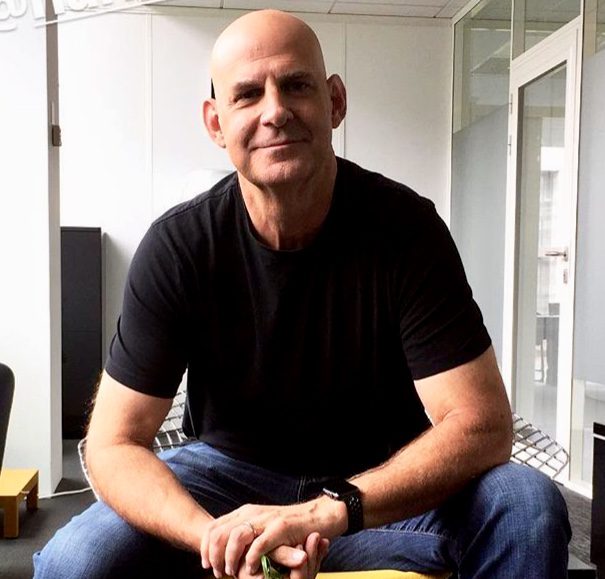
How did Harlan Coben build this fortune?
The answer unfolds through the career, earnings, deals and assets behind the headline estimate.
Harlan Coben before the fame
The background and early turning points that shaped Harlan Coben’s route to prominence.
Harlan Coben was born on 4 January 1962 in Newark, New Jersey, and grew up in Livingston, where he went to the local high school. The New Jersey Hall of Fame, which inducted him in 2017, records the route from there: Amherst College, and a degree in political science.
At Amherst he was in the same fraternity as Dan Brown, and he read The Da Vinci Code in manuscript. He went into his family’s travel business after graduating and wrote in the evenings. He still lives in New Jersey, in Ridgewood, with his wife, the paediatrician Anne Armstrong-Coben, and their four children.
His first novel, Play Dead, appeared in 1990 and sold modestly, as did Miracle Cure the following year. Neither made him a living, and he kept working in the travel business while he wrote.
The breakthrough in form came in 1995 with Deal Breaker, which introduced Myron Bolitar, a sports agent who solves crimes. It ran to eleven books with four further spin-off novels, and it won him the Edgar, the Shamus and the Anthony — the three awards American crime writing takes most seriously, and a set nobody had completed before.
Harlan Coben’s breakthrough years
The career decisions and defining moments that turned recognition into sustained earning power.
The money changed with the standalone thrillers. Tell No One, published in 2001, sold in numbers the Bolitar books had not and was filmed in France in 2006. From then on he produced roughly a book a year, most of them number-one bestsellers in Britain and top-ten in the United States, and the foreign-language editions became as valuable as the English ones.
The New Jersey Hall of Fame put him at more than 75 million books in print worldwide in 43 languages, across 36 works of fiction. Eight years and eight more novels later, and with a screen adaptation driving readers back to the backlist each time, our working takes the figure to roughly 100 million copies.
That is where his craft earnings come from. At a blended author’s net of $0.70 to $1.20 a copy — higher on hardbacks and e-books, much lower on mass-market paperbacks and on the share of foreign licence fees that reaches the author — 100 million copies give gross royalties of $70 million to $120 million over thirty-six years. His advances, including the five-book contract with Grand Central Publishing that The Associated Press reported in March 2018 when he left Dutton, are drawn against those royalties rather than added to them.

What Harlan Coben’s work can earn
Reported pay, contracts, royalties and performance income reveal how the fortune was funded.
In August 2018 Netflix announced a multi-year exclusive overall deal covering fourteen existing titles plus future projects, in English and in other languages. It was an unusual arrangement for a novelist: not a single option but a standing commitment to adapt his catalogue, with him attached to the productions.
Deadline reported in October 2022 that Netflix had re-upped the arrangement for a further four years and twelve more titles, including the whole Bolitar series. The adaptations have been made in Britain, Spain, France and Poland as well as in English, and Fool Me Once was the platform’s most-watched series of the first half of 2024: TheWrap reported 107.5 million views and 689.5 million hours. Those are Netflix’s audience numbers, not his pay.
He is one of a very small group of novelists whose name sells a television series on its own, and Netflix has marketed the adaptations under it. In Britain, where his readership is proportionally largest, he has had a run of number-one bestsellers stretching across two decades.
Beyond the awards, the recognition is commercial: his publishers treat each January as a Coben slot, and the streaming adaptations have twice pushed decade-old novels back into the bestseller charts.

Harlan Coben’s business beyond the main career
Endorsements, ownership interests and investments can keep compounding long after the initial breakthrough.
He does not carry brand endorsements in the way a sportsman or an actor does. What he has instead is paid appearance work: literary festivals, publisher tours, corporate speaking and a steady run of broadcast interviews tied to each book and each series.
Speaking fees for an author of his standing run from $20,000 to $50,000 an engagement. Our working puts the whole non-writing appearance income at $2 million to $5 million across the career, which is immaterial next to the royalties and deliberately treated as such.
His business is the rights to his own work, and it is structured accordingly. He retains ownership of the novels, licenses them rather than selling them outright, and takes executive-producer credits on the adaptations, several of which he has also co-written. That keeps the screen money on his side of the table instead of a one-off option fee.
His interests sit entirely in publishing and television. The travel business he worked in early on belonged to his family, and what carries his name now is the books and the screen rights, which makes his balance sheet unusually simple for someone at this level of income.

Harlan Coben’s notable luxury item
A reported property or major asset offers a tangible glimpse of the wealth behind the public estimate.
The family home is in Ridgewood, in Bergen County, one of the more expensive commuter towns in northern New Jersey, where large older houses trade between $1.5 million and $4 million. He has also kept a house on the New Jersey shore, the setting for a good deal of his fiction.
Our estimate puts the property at $4 million to $8 million in total, on local comparable prices. There is no reported collection, aircraft or boat, and his outgoings have stayed out of the press.
Harlan Coben’s estimated net worth
Public estimates vary because private contracts, investments, taxes and liabilities are not fully disclosed.
How this estimate is calculated
The published anchors are the sales volume and the deals, not an earnings figure. The New Jersey Hall of Fame recorded more than 75 million copies in print in 43 languages across 36 novels; Netflix documented the 2018 overall deal over fourteen titles; Deadline reported the 2022 extension. Our working carries the sales figure to about 100 million copies by 2026 on the basis of eight further novels and the backlist effect of each adaptation.
Royalties at a blended $0.70 to $1.20 a copy give $70 million to $120 million gross across thirty-six years, with advances counted inside that rather than on top. The screen side is our estimate: an overall deal at his level pays $2 million to $5 million a year, so eight years of consecutive deals plus executive-producer fees on more than a dozen series come to $25 million to $50 million. Appearance income adds $2 million to $5 million. Gross career income is therefore $97 million to $175 million.
Against that, United States federal and New Jersey taxes take roughly 40 per cent of writing income even routed through a company, and an agent takes 15 per cent of the publishing side. That leaves $50 million to $90 million retained, to which thirty years of compounding on the earlier earnings adds materially, since the income arrived steadily from the mid-1990s rather than in one windfall. Netting off the property already inside the total, the working supports a range of $70 million to $130 million. The figure we publish is its midpoint. The royalty rate a copy is the input that moves it most, and it is ours rather than his publisher’s.
Confidence: Partly documented — the sales volume, the publishing move and both Netflix deals are on the record, but the per-copy royalty, the value of the overall deals and the retention rate are our own working.
His public profile is built on accessibility rather than glamour. He answers readers directly, does school and library events without a fee, and has spent years promoting other crime writers, including blurbing debut novelists and appearing at festivals that could not pay him.
He has supported literacy and library causes in New Jersey and has been a visible backer of writing programmes at his old college. He keeps his family out of the publicity almost entirely, and has said the reason he writes about suburban households is that he lives in one.
There is very little. No significant legal or professional dispute has attached to him, and the criticism of his work is the ordinary literary kind: that the plots turn on coincidence and that the twists have become a formula. He has answered it cheerfully and kept writing the same books.
The one recurring argument around him is about the Netflix arrangement, which some in publishing have read as a writer handing his catalogue to a single buyer. He has made the counter-case in interviews: he keeps the copyright, the books sell more because of the series, and the adaptations have opened markets that translation alone had not.