
 How Much Are They Worth?
Celebrity fortunes, explained









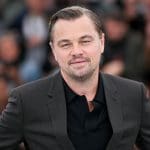

How did Jaafar Jackson build this fortune?
The answer unfolds through the career, earnings, deals and assets behind the headline estimate.
Jaafar Jackson before the fame
The background and early turning points that shaped Jaafar Jackson’s route to prominence.
Jaafar Jackson was born on 25 July 1996 in Los Angeles, the second son of Jermaine Jackson of the Jackson 5, and therefore a nephew of Michael Jackson. He grew up around the family’s musical apparatus and, from his late teens, released his own music independently without leaning heavily on the surname.
That distinction matters for the money. He is not a beneficiary of Michael Jackson’s estate, whose beneficiaries are Michael Jackson’s own children and his mother, and estimates that assume otherwise are simply wrong. His finances are his own earnings as a singer and, since 2026, as a screen actor, and that is what this profile counts.
His first single, Got Me Singing, came out in 2019, followed by a handful of self-released tracks and a small performing career built through streaming and social media rather than a label deal. Independent releases of that scale produce modest money: on our estimate, streaming royalties and occasional appearances brought in the tens of thousands of dollars a year through his early twenties, enough to work as a musician and no more.
He had no screen credits when Lionsgate began its search for an actor to play his uncle. The studio considered established names before settling on resemblance, movement and a family understanding of the subject over experience (Rolling Stone).
Jaafar Jackson’s breakthrough years
The career decisions and defining moments that turned recognition into sustained earning power.
In January 2023 he was announced as the lead in Michael, the biographical film about his uncle, directed by Antoine Fuqua and produced by Graham King, with Colman Domingo, Miles Teller and Nia Long alongside him. He signed with Creative Artists Agency on securing the part. It was an unusual casting: a first-time screen actor given the lead of a major studio production.
What the part paid is our estimate, because Lionsgate does not publish cast fees. A first-time lead in a studio biopic is customarily paid a low-seven-figure upfront fee with a ladder of bonuses tied to box-office milestones, and on that basis we put his upfront fee at 2 to 4 million dollars, with the film’s performance triggering a further 2 to 5 million in bonuses, for roughly 4 to 9 million dollars gross before his agency’s commission and tax. The assumption is that a standard bonus ladder was written into a deal signed when nobody expected a billion-dollar result; the arithmetic is set out below.

What Jaafar Jackson’s work can earn
Reported pay, contracts, royalties and performance income reveal how the fortune was funded.
The gamble worked commercially beyond anything the studio had planned for. The film opened in April 2026 to 97 million dollars domestically and 217 million worldwide, shattering the opening-weekend record for a musical biopic (Variety), and became Lionsgate’s highest-grossing release ever within two months (Deadline). By July it had passed a billion dollars worldwide, the first biopic to do so and the first Lionsgate film of any kind to reach that mark (Deadline, Variety), overtaking Oppenheimer as the highest-grossing biographical film on record (Variety).
Box office is the studio’s money, not his, and the two are kept apart here. What the gross does is set his price. A sequel is in development (Deadline), with Lionsgate targeting a production start around the turn of the year and a release window of late 2027 or early 2028 (Deadline), and the actor who carried a billion-dollar debut negotiates that fee from a completely different position.
He is the first lead actor in film history to debut in a picture that grossed more than a billion dollars, and the reception of his performance – the dancing above all – was the most consistent point of praise in reviews that were otherwise divided about the film. Forbes, tracking the run, treated the milestone as a vindication of the casting rather than of the marketing (Forbes). Awards attention for a spring release is decided in the following winter, and any nominations would arrive after this profile’s date.

Jaafar Jackson’s business beyond the main career
Endorsements, ownership interests and investments can keep compounding long after the initial breakthrough.
None of consequence so far. A young actor coming off a billion-dollar film is an obvious target for fashion and fragrance campaigns, and if one lands it will be the first meaningful money outside the film fee. Until it does, this line is zero, and the estimate below does not pretend otherwise.
There are none yet. He has no production company, no label and no consumer brand, which is normal for an actor one film into a career. The independent music is a craft rather than a business, and the profile treats it that way.

Jaafar Jackson’s notable luxury item
A reported property or major asset offers a tangible glimpse of the wealth behind the public estimate.
He owns no property that appears in any public record, and at his age and career stage that is unsurprising. The principal asset is the after-tax remainder of the film fee, set out below, together with whatever family support underpinned the years before it. There is no aircraft, no car collection and no art, and the profile does not invent them.
Jaafar Jackson’s estimated net worth
Public estimates vary because private contracts, investments, taxes and liabilities are not fully disclosed.
How this estimate is calculated
The documented input is the film’s performance: a 217 million dollar worldwide opening, Lionsgate’s biggest release ever, and a billion-dollar gross by July 2026 (Deadline). Everything about his own fee is our estimate. Upfront: 2 to 4 million dollars, the customary band for a first-time lead in a studio film of this budget. Bonuses: a standard ladder pays fixed sums at domestic thresholds such as 100, 200 and 300 million dollars, and the film cleared all three, which we put at 2 to 5 million in total. Gross: 4 to 9 million dollars.
From that gross, CAA and management take about 15 to 20 per cent, and federal and California tax takes roughly 45 per cent of the remainder, leaving 2 to 4 million dollars net. Add the small pre-film position from the music and family support, and subtract the ordinary living costs of two years in production and promotion, and the range below follows. It assumes the bonus ladder existed and has been paid; if his deal was a flat fee with no bonuses, the true figure sits at the bottom of the range.
He is the rare case where the next contract, not the last one, is the fortune: a billion-dollar debut buys a first-time actor a negotiating position his bank balance has not yet caught up with.
The working supports a range of $2 million to $5 million. The figure we publish is its midpoint.
Confidence: Indicative — the film’s grosses are documented, but the fee, the bonus structure and the pre-film position are all modelled from industry norms rather than from any figure about his own money.
Think you know Jaafar Jackson? Take the quiz: Easy · Medium · Legendary
His public image is that of a courteous, quietly spoken performer who has handled a scrutiny-heavy role with notable restraint, giving few interviews and none about the family’s internal affairs. He has no foundation and has made no public gift of a size that would register in this section; any giving is private.
The controversy attaching to Jaafar Jackson is not his own. Michael was contested from its announcement over how it would treat the child sexual abuse allegations made against Michael Jackson, which he denied throughout his life and of which he was acquitted at criminal trial in 2005, and which were revisited in the 2019 documentary Leaving Neverland. Reporting during production described significant reworking of the film’s handling of that material, with the director and producer paid additional sums for extensive reshoots that removed the disputed sequences (The Hollywood Reporter). He carries the scrutiny that comes with portraying the subject, without having had any part in the events.