 How Much Are They Worth?
Celebrity fortunes, explained






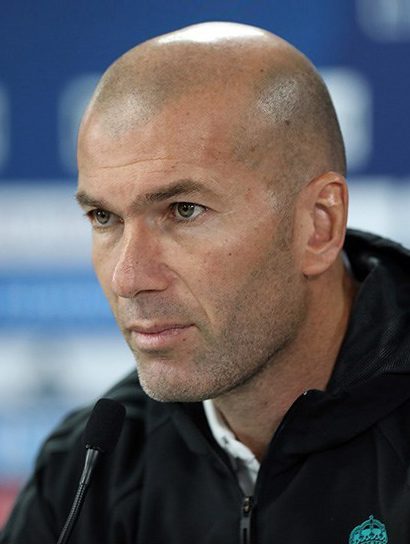
How did Zinedine Zidane build this fortune?
The answer unfolds through the career, earnings, deals and assets behind the headline estimate.
Zinedine Zidane before the fame
The background and early turning points that shaped Zinedine Zidane’s route to prominence.
Zinedine Yazid Zidane was born on 23 June 1972 in Marseille, the youngest of five children of Algerian parents from Kabylie who had settled on the La Castellane estate in the city’s northern districts. His father worked nights as a warehouseman.
He played on the estate’s concrete square until a scout sent him to the AS Cannes academy at fourteen. The story he tells about the move is a financial one: he asked to be paid in a car rather than cash, and after his first professional goal the Cannes president bought him one.
He made his league debut for Cannes in May 1989 and spent three seasons there on the wages of a young French professional, which our estimate puts at EUR150,000 to EUR300,000 in total in the money of the day. A move to Bordeaux in 1992 turned him into an international.
Four seasons at Bordeaux, a UEFA Cup final in 1996 and a France debut in 1994 took him to our estimate of EUR400,000 to EUR700,000 a year by the end, or EUR1.2 million to EUR2.2 million across the spell. Juventus then bought him for a reported GBP3.2 million – a fee paid to Bordeaux, not to the player.
Zinedine Zidane’s breakthrough years
The career decisions and defining moments that turned recognition into sustained earning power.
Five seasons in Turin made him the best player in the world: two Serie A titles, two Champions League finals and the 1998 Ballon d’Or. Italian wages at the top of that era were a fraction of today’s, and our estimate of his Juventus pay is EUR2.5 million to EUR4 million a year net, or EUR13 million to EUR20 million across 1996 to 2001.
Then the transfer everybody quotes. On 9 July 2001 Real Madrid signed him for about EUR77.5 million, a world record that stood for eight years. Every cent of it went to Juventus. What Zidane got was the contract that came with it – our estimate of EUR6 million to EUR8 million a year net plus image rights, or EUR32 million to EUR45 million across five seasons, which makes his own playing earnings across 1989 to 2006 roughly EUR46 million to EUR67 million, about $50 million to $72 million, in the money of the day.
What Zinedine Zidane’s work can earn
Reported pay, contracts, royalties and performance income reveal how the fortune was funded.
He won the 1998 World Cup with two headers in the final and the 2000 European Championship, was named FIFA World Player of the Year three times, and scored the volley that won the 2002 Champions League. He retired after the 2006 World Cup final with the tournament’s Golden Ball.
The second career paid better than the first. He coached Real Madrid’s reserves from 2014, took the first team in January 2016 and won three consecutive Champions Leagues, leaving in 2018 on a salary that had risen to around EUR7.5 million. He returned in March 2019 on roughly EUR12 million a year and won LaLiga in 2020. Those two spells plus the Castilla years are worth EUR45 million to EUR53 million, about $49 million to $57 million, on our estimate.
In July 2026 the job he had waited five years for arrived. Al Jazeera and ESPN reported that the French Football Federation appointed him head coach of the national team on a four-year contract running to 2030, succeeding Didier Deschamps after France finished fourth at the World Cup. He said he had turned down every club offer because he only wanted this one.
France pays its head coach at a different scale from Real Madrid: our estimate of the job is EUR3.5 million to EUR4.5 million a year, so the four-year deal is worth EUR14 million to EUR18 million gross, of which only a few months had been earned by the end of 2026.
Zinedine Zidane’s business beyond the main career
Endorsements, ownership interests and investments can keep compounding long after the initial breakthrough.
This is the largest of his three income lines and the least visible. The anchor is adidas, which has backed him since the early 1990s, put his name on a boot, built Z5 with him and kept him through his managerial career; around it have sat Volvic, Orange, Ford, Generali, Christian Dior, Mango and Lego, plus ambassadorial work around major tournaments.
At his peak in the mid-2000s he was among the highest-earning athletes in the world on endorsements, at EUR8 million to EUR12 million a year, falling to EUR1.5 million to EUR3 million a year in the managerial decades. Across 1996 to 2026 our estimate of his total commercial income is EUR65 million to EUR110 million in the money of the day.
His own business is Z5, the chain of five-a-side football centres he launched at Aix-en-Provence in 2009, built with adidas and since extended to other French sites, to Turin and, as Sport Buzz Business and NSS Sports have covered, into padel. It is a real operating business with premises, staff, a gym, a restaurant and a shop, rather than a licensing arrangement.
Centres of that kind turn over EUR1.5 million to EUR3 million each. Our estimate of the equity value of his holding across the group is EUR10 million to EUR25 million. Alongside it he has taken the conventional retired-athlete route of property and managed investments rather than start-up equity.
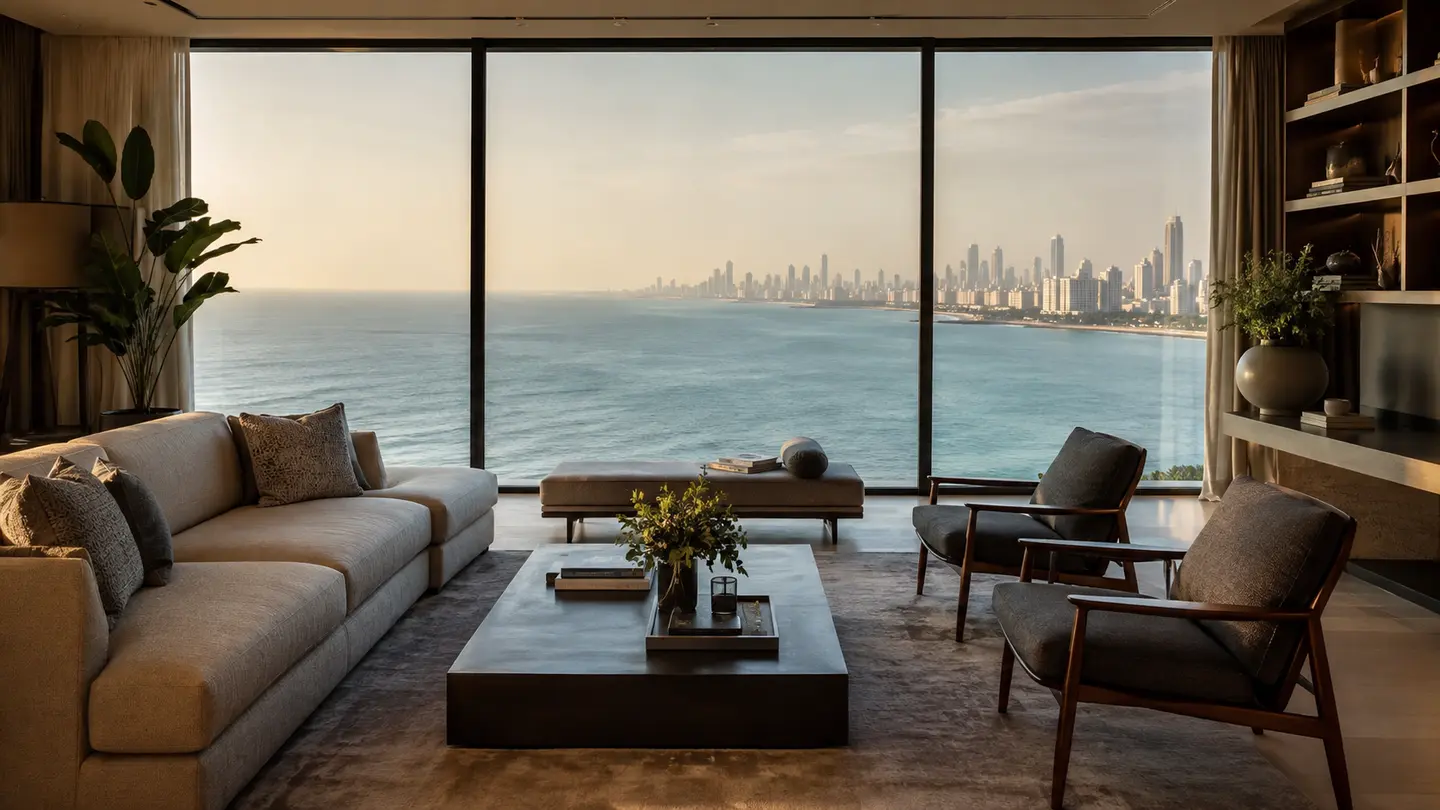
Zinedine Zidane’s notable luxury item
A reported property or major asset offers a tangible glimpse of the wealth behind the public estimate.
He has kept two bases for twenty years: a house in Madrid, bought when he signed in 2001, and property around Marseille and Aix-en-Provence, where the first Z5 sits. Our estimate of his property net of borrowing is EUR20 million to EUR40 million.
The rest is financial rather than physical. His four sons’ own football careers are theirs and are not counted here. Nor is any transfer fee, prize fund or club revenue: those are the clubs’ money throughout.
Zinedine Zidane’s estimated net worth
Public estimates vary because private contracts, investments, taxes and liabilities are not fully disclosed.
How this estimate is calculated
The documented material is the football rather than the money: the GBP3.2 million Juventus paid Bordeaux in 1996, the EUR77.5 million Real Madrid paid Juventus in 2001, the managerial salaries reported at around EUR7.5 million and then EUR12 million a year, and the four-year France contract signed in July 2026. None of the transfer fees is his; they are the clubs’ money and are excluded.
The arithmetic, in money of the day: playing wages 1989-2006, EUR46 million to EUR67 million; management 2014-2026, EUR45 million to EUR53 million; endorsements 1996-2026, EUR65 million to EUR110 million. Gross career earnings of EUR156 million to EUR230 million. French and Spanish tax across those years, plus 10 to 15 per cent to agents and management, leaves him about 47 per cent, or EUR73 million to EUR108 million retained at the time it was earned. Brought forward on euro-area consumer prices, where EUR1 in 2003 buys what about EUR1.65 does now per the European Central Bank, and converted at EUR1 to $1.08, that is $130 million to $195 million before any return on it. Adding two decades of investment growth, the Z5 equity at EUR10 million to EUR25 million and property at EUR20 million to EUR40 million, and deducting thirty years of living at that level, the working supports a range of $140 million to $240 million, and we publish its midpoint.
Everything here turns on the endorsement line, which is both the biggest number and the one with no public anchor at all: a thirty-year adidas relationship could plausibly have averaged half what we assume or twice it, and that single assumption swings the answer by sixty million dollars. The French federation contract is the one input likely to be clarified soon, since coaching salaries there have a habit of surfacing in parliamentary and federation accounts.
Confidence: Partly documented — his transfers, trophies and managerial contracts are on the record, while his own wages and his commercial income are our working.
He has been a United Nations Development Programme goodwill ambassador since 2001, has organised charity matches for two decades, and gives consistently to causes in Marseille and Algeria.
His public image is unusually quiet for someone of his fame. He gives few interviews, which is why the arithmetic below has to be built from the ground up rather than taken from anywhere.
The famous one is sporting. In the 110th minute of the 2006 World Cup final he was sent off for a head-butt on Marco Materazzi, his last act as a player; he apologised to the watching public while declining to apologise to the player, and FIFA fined him and imposed a three-match ban served as community work. It cost him nothing commercially – his Dior and adidas work continued immediately afterwards.
Beyond that there is very little. He has had no tax case of the kind that caught several of his Spanish-league contemporaries, no agency dispute of note and no business failure on the record.