
 How Much Are They Worth?
Celebrity fortunes, explained









How did Rob Reiner build this fortune?
The answer unfolds through the career, earnings, deals and assets behind the headline estimate.
Rob Reiner before the fame
The background and early turning points that shaped Rob Reiner’s route to prominence.
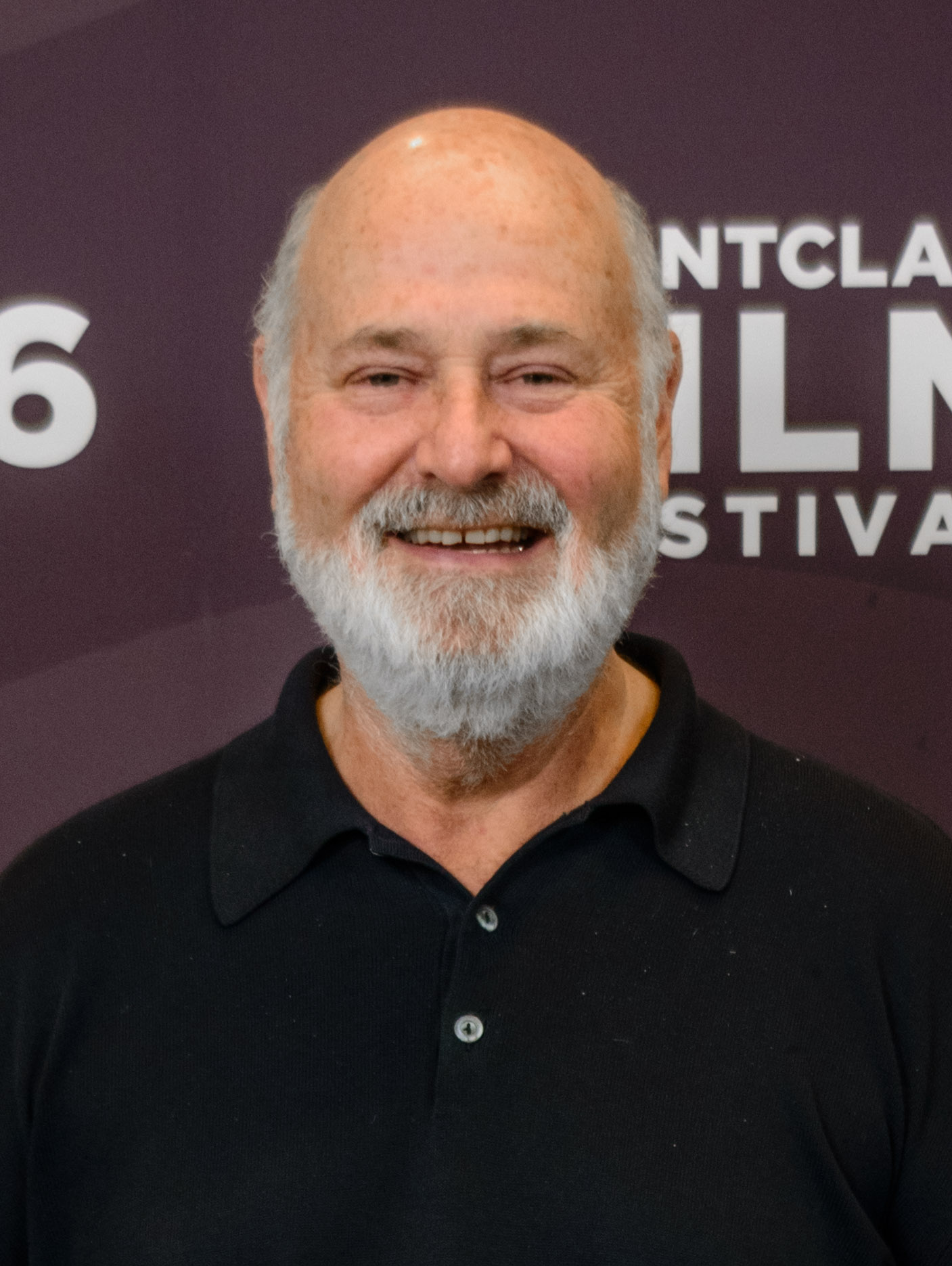
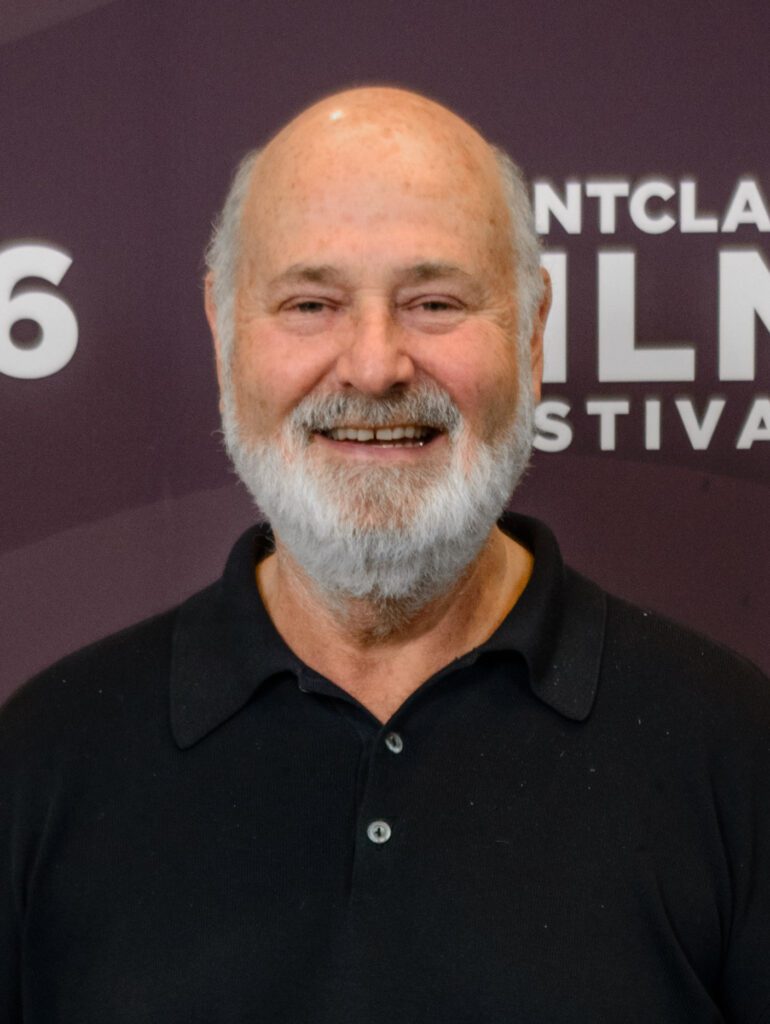
Robert Reiner was born on 6 March 1947 in the Bronx, the son of the comedian, writer and director Carl Reiner and the actress Estelle Reiner. He studied film at UCLA and was writing for network television before he turned twenty-five. He died at his Los Angeles home on 14 December 2025, aged 78, alongside his wife, the photographer Michele Singer Reiner (CNN). His was a working life in two halves – a decade in front of the camera, then four decades behind it – and each half produced its own money.
Reiner’s first professional earnings came from writing, not performing. He wrote for The Smothers Brothers Comedy Hour and picked up small parts on Gomer Pyle and Batman. Staff comedy writing on a network variety show in the late 1960s paid roughly 500 to 1,000 dollars a week at the Writers Guild rates of the day – our estimate, from the minimums then in force – the baseline against which the next job should be read.
Rob Reiner’s breakthrough years
The career decisions and defining moments that turned recognition into sustained earning power.
In 1971 Norman Lear cast him as Michael Stivic, Archie Bunker’s son-in-law, in All in the Family. The part ran eight seasons and roughly 190 episodes and won him two Emmy Awards. The programme was the most-watched in the United States for five consecutive seasons and reshaped what a network sitcom was allowed to say (The Hollywood Reporter).
Our estimate of what it paid, from period network cast rates: a young supporting lead started at something like 1,500 to 2,500 dollars an episode in 1971 and reached the order of 10,000 to 15,000 dollars an episode by the closing seasons. Across about 190 episodes that is roughly 1.2 to 1.8 million dollars in period money – call it 8 to 12 million in today’s terms – before residuals, which kept arriving for decades. This, and not the films, is the money that bought him the freedom to stop acting at thirty-one and start directing.

What Rob Reiner’s work can earn
Reported pay, contracts, royalties and performance income reveal how the fortune was funded.
This Is Spinal Tap, his 1984 debut, invented a comic form that has been imitated ever since. What followed is among the most remarkable runs in modern Hollywood: Stand by Me, The Princess Bride, When Harry Met Sally…, Misery and A Few Good Men inside eight years, all commercially successful (The Hollywood Reporter’s account of that run).
Directing fees are the second pillar of the fortune. A filmmaker with his record commanded roughly 3 to 6 million dollars a picture on a studio feature through the late 1980s and 1990s – our estimate, from the going rate for an A-list director of the day. Reiner directed eleven features between 1984 and 1999 and more after, so his directing fees alone come to something in the region of 35 to 55 million dollars in nominal terms across the run, before any participation in the films’ profits.
Reiner occupied an unusual position: famous twice over, for two different jobs, to two different generations – Michael Stivic to one, the name on the front of The Princess Bride to the next. That recognition converted into professional capital rather than fan economics: it is why five founders could raise a studio on the strength of his name in 1987, and why his directing fee sat where it did.

Rob Reiner’s business beyond the main career
Endorsements, ownership interests and investments can keep compounding long after the initial breakthrough.
Reiner did not build a brand-endorsement business. His public identity rested on a television character three decades old, a body of films and political advocacy – the last of which actively deters consumer sponsorship, because it halves the available audience before a campaign starts. The sponsorship line in his accounts is close to nil.
In 1987 Reiner co-founded Castle Rock Entertainment with Martin Shafer, Andrew Scheinman, Glenn Padnick and Alan Horn. It produced The Shawshank Redemption, The Green Mile and, most consequentially, Seinfeld.
Turner Broadcasting bought the company in 1993. The reported terms were approximately 100 million dollars in cash or stock, plus the assumption of 46 million dollars of debt owed to Westinghouse and 15 million to Sony Pictures – part of a wider 672 million dollar transaction in which Turner also took New Line Cinema (Variety’s 1993 report on the completed sale, the Baltimore Sun). The number that matters for a personal wealth profile is not 100 million but his slice of it: the consideration was divided across five founders and institutional backers, and our estimate puts his personal share in the region of 10 to 25 million dollars before tax. The Seinfeld syndication income so often attached to his name belongs to the library, and the library passed to Turner in 1993.

Rob Reiner’s notable luxury item
A reported property or major asset offers a tangible glimpse of the wealth behind the public estimate.
Property is the largest identifiable asset class after the earnings themselves. Reiner lived in Brentwood, on the west side of Los Angeles, and held property there across the decades in which west Los Angeles land went from expensive to extraordinary. Our estimate for the family’s property position is 20 to 40 million dollars gross: the Brentwood residence alone sits in the upper single-digit to low double-digit millions at prevailing neighbourhood values. Beyond property the assets look conventional for a man of his generation and income – securities, retirement vehicles and a residual stream from a library that has never stopped airing.
Rob Reiner’s estimated net worth
Public estimates vary because private contracts, investments, taxes and liabilities are not fully disclosed.
How this estimate is calculated
Four inputs. First, the acting: roughly 1.2 to 1.8 million dollars in period earnings from All in the Family on our estimate above, plus half a century of residuals on a permanently syndicated series. Second, the directing: our estimate of 35 to 55 million dollars in nominal fees across more than twenty features, spread from 1984 to the 2020s. Third, Castle Rock: a reported 100 million dollar sale price plus assumed debt, divided among five founders and outside investors, from which we model a personal share of 10 to 25 million dollars pre-tax (Variety’s 1993 report on the completed sale, the Baltimore Sun). Fourth, property: 20 to 40 million dollars gross on our estimate of the Brentwood holdings.
Summed at nominal value and then compounded over the decades in which each payment actually landed, those four lines support a figure in the low hundreds of millions rather than the tens of millions. The estimate assumes ordinary post-tax investment returns on Californian earnings, no hidden leverage against the property, and no continuing participation in the Castle Rock library after 1993. Published assessments at his death converged on roughly 200 million dollars, and our upper bound meets it. The lower bound exists because the largest transaction of his career was a company sale shared with four partners and institutional investors, and because the final shape of an estate now in probate is a question the courts will settle before any valuer does.
The working supports a range of $100 million to $200 million. The figure we publish is its midpoint.
Confidence: Partly documented — the Castle Rock sale price and the filmography are on the record, while the acting and directing fees behind the range are modelled from period rates rather than taken from a contract.
Think you know Rob Reiner? Take the quiz: Easy · Medium · Legendary
Reiner gave a substantial share of his working life to causes rather than to fees. He co-founded the I Am Your Child Foundation, which campaigned on early-childhood development, and was the principal architect of California’s Proposition 10 in 1998, a tobacco tax that funds early-years programmes across the state. He later co-founded the American Foundation for Equal Rights, which brought and funded the federal challenge to California’s Proposition 8. For three decades he was among the most visible political donors and advocates in American entertainment.
For most of his life the scrutiny Reiner attracted was political: opponents characterised his advocacy as celebrity overreach, and his prominence in Californian ballot campaigns made him a standing target. A long-running commercial dispute over This Is Spinal Tap profits, brought by the film’s creators against its rights holder, was resolved in the creators’ favour.
Following the deaths of Reiner and his wife, their son Nick was charged with two counts of murder (the Los Angeles County District Attorney). The case has not been tried and the charges remain allegations; nothing here should be read as a finding of guilt. For this profile, the estate’s distribution and final valuation are matters now before the courts.