
 How Much Are They Worth?
Celebrity fortunes, explained
How Much Are They Worth?
Celebrity fortunes, explained





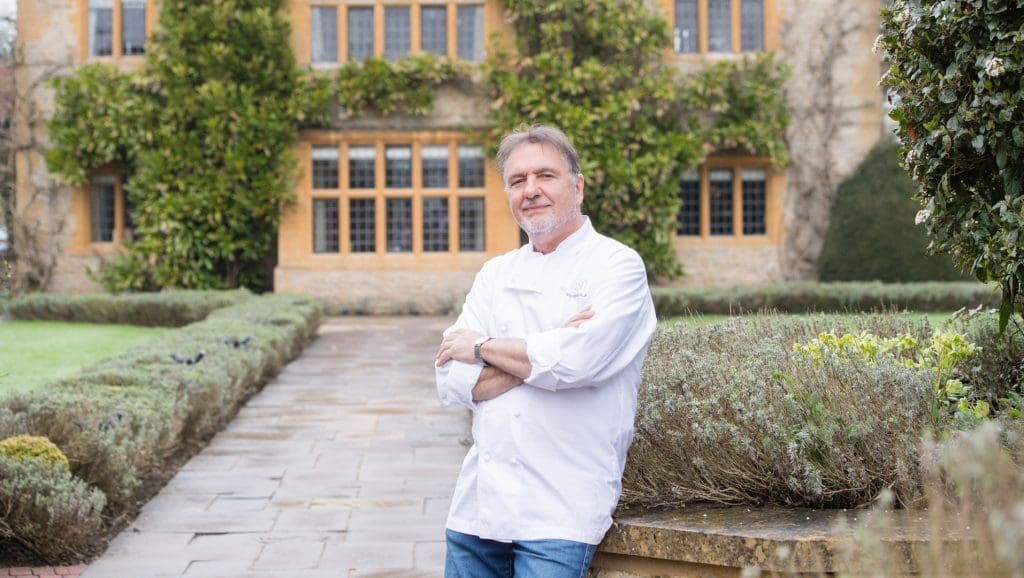
Raymond Blanc (UK) – Le Manoir aux Quat’Saisons
Net worth revealed after 6 slides
Begin the countdown ↓
How did Raymond Blanc build this fortune?
The answer unfolds through the career, earnings, deals and assets behind the headline estimate.
Raymond Blanc before the fame
The background and early turning points that shaped Raymond Blanc (UK) – Le Manoir aux Quat’Saisons’s route to prominence.
Raymond Blanc was born on November 19, 1949, near Besancon in the Franche-Comte region of eastern France, and grew up in the nearby village of Saone. He was one of five children in a family where money was tight, and food was central to daily life regardless: five days a week he worked the vegetable garden alongside his father, and his mother taught him to cook what they grew and foraged. That upbringing, rooted in seasonal produce and home cooking rather than restaurant training, later became the foundation of his culinary identity. Wikipedia documents his early life in detail.
Blanc arrived in England in the summer of 1972 to work as a waiter at the Rose Revived, a restaurant and pub in Oxfordshire. He had no formal culinary training and no mentor; by his own account, he was effectively thrown into the kitchen one day when the regular cook fell ill, and that accident became the start of his cooking career. Entirely self-taught, he opened his first restaurant, Les Quat’Saisons, in Summertown, Oxford, in 1977 at the age of 27. The restaurant earned its first Michelin star within about eighteen months and a second in 1981, an extraordinary result for a self-taught chef running his first kitchen. Great British Chefs covers this early period of his career.
Raymond Blanc’s breakthrough years
The career decisions and defining moments that turned recognition into sustained earning power.
In 1984, Blanc bought a 15th-century manor house in Great Milton, Oxfordshire, from its owner, Lady Cromwell, reportedly after knocking on her door and telling her he wanted to buy it, a request she agreed to partly because she had already eaten at Les Quat’Saisons and called it the best meal of her life. He transformed the property into Le Manoir aux Quat’Saisons, a hotel and restaurant built around his own two-acre kitchen garden. The restaurant was awarded two Michelin stars in its very first year and has held them continuously ever since, making it the only country house hotel in Britain to retain two stars for more than thirty years running. The story of the purchase and the restaurant’s early success is recounted by Luxurious Magazine.

What Raymond Blanc’s work can earn
Reported pay, contracts, royalties and performance income reveal how the fortune was funded.
Le Manoir aux Quat’Saisons has now held two Michelin stars for more than four decades, a run of consistency almost unmatched among British restaurants. Blanc was awarded an OBE in 2008 for services to culinary excellence and to promoting healthy, seasonal family food, and in 2013 he received the insignia of Chevalier in France’s Ordre National de la Legion d’Honneur, the country’s highest civilian decoration. Beyond his own restaurant, Le Manoir’s kitchen has functioned for decades as a training ground for young British chefs who went on to lead their own acclaimed restaurants. Details of his Michelin history are covered by the Michelin Guide, and his broader career achievements are profiled by Forbes.
Blanc became one of the most familiar chefs on British television over a career spanning several decades, presenting a string of BBC Two series including The Very Hungry Frenchman, Raymond Blanc’s Kitchen Secrets, How to Cook Well, Simply Raymond, and Simply Raymond: Kitchen Garden. He has also published numerous bestselling cookbooks that extended his reputation well beyond his own kitchen and into mainstream British food culture. His broadcasting career and publishing record are summarized by Wikipedia, which profiles his life and work.
Raymond Blanc’s business beyond the main career
Endorsements, ownership interests and investments can keep compounding long after the initial breakthrough.
Rather than one headline global endorsement deal, Blanc’s commercial partnerships have tended to sit close to his hospitality expertise. In 2022 he lent his name to the Sodexo Live! Academy, an apprenticeship programme giving trainees hands-on experience of Michelin-level kitchen standards, as detailed by Sodexo. His ongoing association with Belmond, the LVMH-owned luxury hotel group that now operates Le Manoir and the Raymond Blanc Cookery School, functions as a long-running brand partnership in its own right, as described on Belmond’s own site.
Blanc’s commercial history is one of repeated expansion followed by selling on majority control. In 1981 he launched Maison Blanc, a chain of bakeries and patisseries, which was sold to Lyndale Foods for around 12 million pounds in 1999 before later passing to Kout Food Group in 2007 and eventually closing in 2017. In 1996 he opened Le Petit Blanc brasserie in Oxford and expanded it to Cheltenham, Birmingham, and Manchester, but by 2003 the four-restaurant group had run up debts of more than 1 million pounds and entered administration; it was rescued by investor Mark Derry and relaunched as Brasserie Blanc, which was later sold to private equity firm Alchemy Partners, as reported by the Business Magazine. Le Manoir itself followed a similar path: Blanc sold a majority stake to Virgin, which later passed to Orient-Express Hotels, now rebranded as Belmond and owned by LVMH since 2019. In September 2025, Blanc announced he was stepping back as chef patron of Le Manoir after 41 years to become a lifetime ambassador, with the hotel closing for an 18-month redevelopment before reopening in 2027 under new culinary director Arnaud Donckele, according to Restaurant Online.
Raymond Blanc’s notable luxury item
A reported property or major asset offers a tangible glimpse of the wealth behind the public estimate.
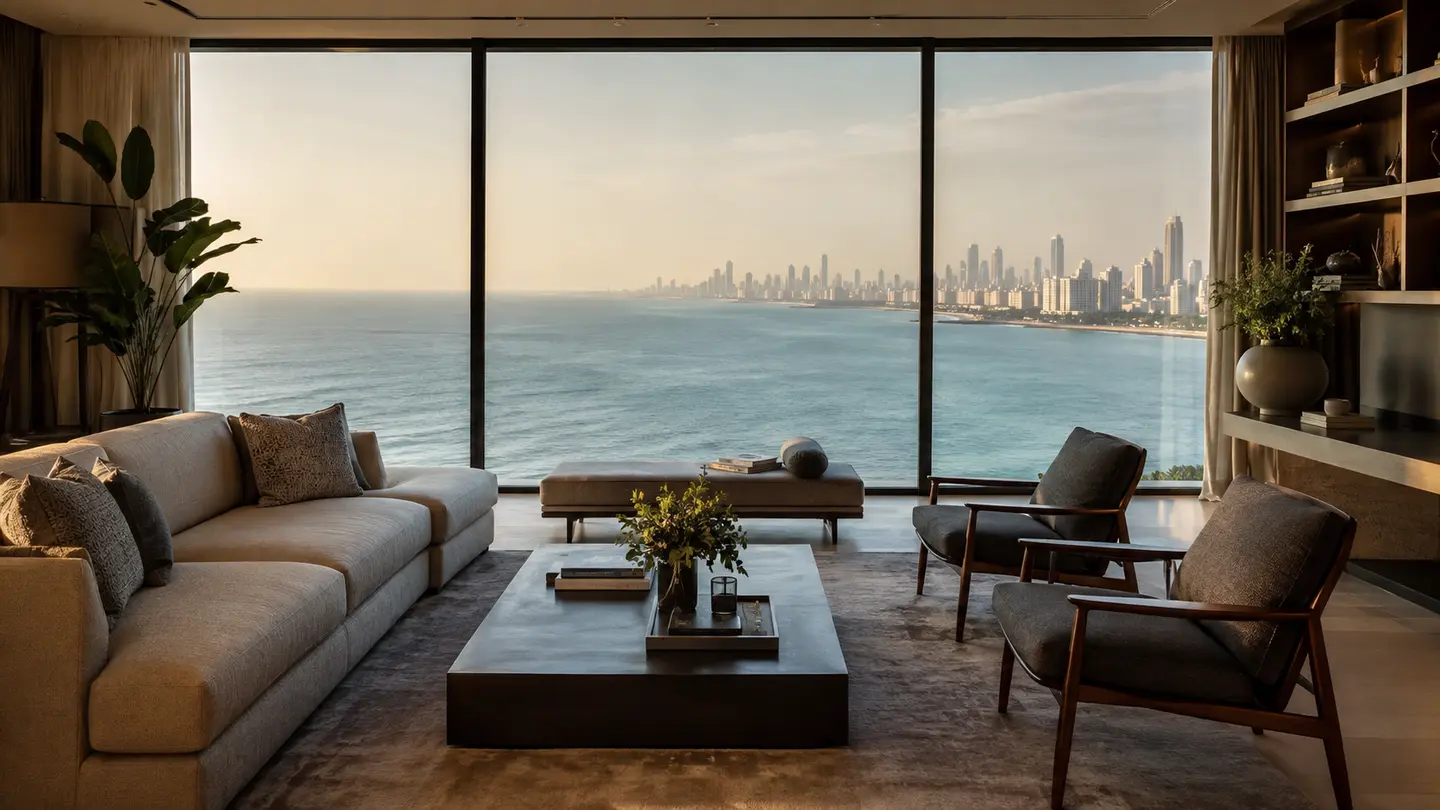
The one substantial property consistently tied to Blanc’s name in public reporting is Le Manoir aux Quat’Saisons itself, the 15th-century, 32-room manor house in Great Milton that he bought in 1984 and built into a two-Michelin-starred hotel, though he no longer holds majority ownership after selling stakes first to Virgin and later to what is now Belmond. His most personally tended asset is arguably the two-acre kitchen garden he built there, which grows around 90 varieties of organic vegetables and dozens of herb varieties across a series of themed gardens. No independent reporting has surfaced a separate private estate or additional real estate portfolio held by Blanc outside of this hospitality property. The manor, its gardens, and their history are profiled in detail by Luxurious Magazine.
Raymond Blanc’s estimated net worth
Public estimates vary because private contracts, investments, taxes and liabilities are not fully disclosed.
How this estimate is calculated
Blanc has never published personal audited accounts, and for most of its history Le Manoir aux Quat’Saisons has been majority owned by outside groups rather than by Blanc personally, first Virgin, then Orient-Express Hotels, and now Belmond under LVMH. In the absence of a verified figure, aggregated estimates lean on a mix of known income streams: proceeds from selling majority stakes in Maison Blanc, which sold for around 12 million pounds in 1999, and in Brasserie Blanc, which was later sold to Alchemy Partners; decades of ambassador and consulting fees tied to Le Manoir and its Cookery School; royalties from numerous bestselling cookbooks; and fees connected to his long run of BBC television series. Entertainment finance sites such as CelebsMoney, drawing on aggregated estimates including figures commonly attributed to Celebrity Net Worth, place his fortune at around 7 million pounds, while other trackers put the figure lower, closer to 2 to 5 million dollars; none of these numbers are sourced to audited filings, so they should be treated as secondary, unverified estimates rather than confirmed financial disclosures. Weighing those aggregated estimates against decades of stake sales in Maison Blanc and Brasserie Blanc, together with the reality that restaurant and hospitality ownership, even at the highest level of acclaim, tends to be a modest-margin business, produces the following range.
Blanc has been President of the Sustainable Restaurant Association since 2012, a role reflecting his long-standing advocacy for seasonal, local, and organic sourcing within the wider industry. He has also put his name behind apprenticeship and mentoring schemes, including the Sodexo-run Raymond Blanc Academy and hands-on training of apprentices across Brasserie Blanc sites, and he is listed as a supporter of the Springboard Charity, which works to bring young and disadvantaged people into hospitality careers, as shown on the charity’s own team page. That combination of sustainability advocacy and youth training has left him with a public image closer to industry elder statesman than headline-grabbing celebrity chef.
Blanc’s public record is largely free of major personal scandal, and the closest he has come to sustained public criticism was a 2013 tweet about a Great British Bake Off finalist, Ruby Tandoh, in which he suggested her slim build made him doubt her love of baking. The comment drew a swift public backlash, a sharp reply from Tandoh herself, and an apology from Blanc, who said his command of English was partly to blame for how the remark landed, as reported by Euronews. On the business side, the original four-restaurant Le Petit Blanc brasserie group entered administration in 2003 after running up debts of more than 1 million pounds, a financial stumble covered by the Business Magazine, though this reflects ordinary restaurant-industry financial risk rather than any personal wrongdoing. Beyond these two episodes, Blanc’s public image has remained largely positive across a five-decade career.