
 How Much Are They Worth?
Celebrity fortunes, explained
How Much Are They Worth?
Celebrity fortunes, explained







How did Rishabh Pant build this fortune?
The answer unfolds through the career, earnings, deals and assets behind the headline estimate.
Rishabh Pant before the fame
The background and early turning points that shaped Rishabh Pant’s route to prominence.
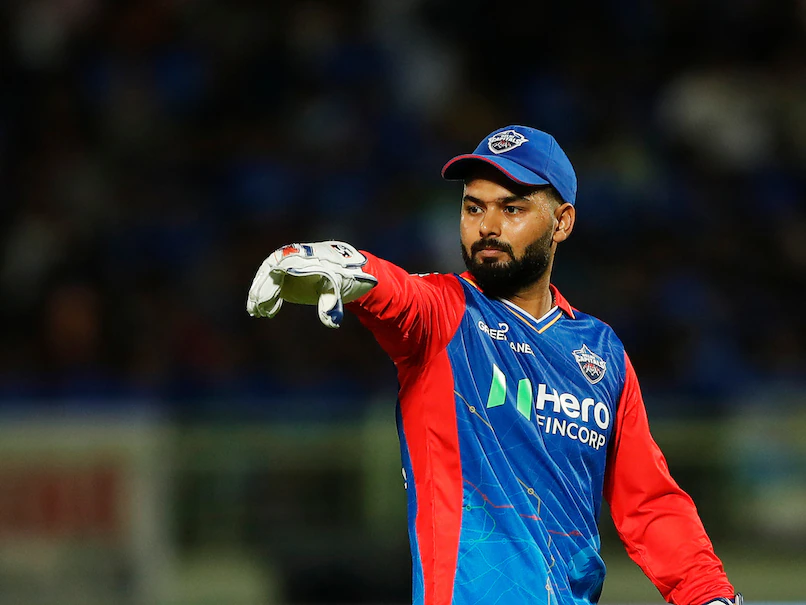
Rishabh Pant is an Indian wicketkeeper-batter born in Roorkee in 1997. His financial story is unusually discontinuous: a fast rise through Delhi cricket and the Indian Premier League was followed by a life-threatening December 2022 road crash, a long rehabilitation, and a return to elite cricket in 2024. The IPL’s exact player page records his 2016 debut, match and run totals, India’s 2024 T20 World Cup and 2025 Champions Trophy wins, and his later move to Lucknow. Those facts establish the identity and earning timeline; they do not disclose his private balance sheet.
Pant moved into national attention through age-group cricket, including a rapid century at the 2016 Under-19 World Cup, and Delhi selected him before his twentieth birthday. Delhi’s IPL franchise bought him in 2016 and developed him from a prospect into a retained core player and captain. This matters to the estimate because his early contracts were materially smaller than the record auction price that came later. They are modeled year by year rather than retroactively applying his present salary to his entire IPL career. Domestic match fees and youth cricket are treated as minor inputs beside subsequent league and India income.
Rishabh Pant’s breakthrough years
The career decisions and defining moments that turned recognition into sustained earning power.
His breakthrough combined aggressive IPL batting with an India debut and, later, Test hundreds outside Asia. The IPL profile identifies him as the first Indian wicketkeeper to make Test centuries in both England and Australia, achievements that made him valuable across formats. His recovery supplied a second breakthrough. The ICC’s report on his 2024 return records a 53 from 32 balls against Bangladesh immediately before the T20 World Cup. That comeback restored international selection, match-fee eligibility and sponsor confidence after more than a year without competitive cricket.

What Rishabh Pant’s work can earn
Reported pay, contracts, royalties and performance income reveal how the fortune was funded.
Pant’s Gabba innings in India’s 2021 series victory, his Test hundreds, Delhi captaincy and World Cup squad place are commercially important milestones. Performance after the crash is especially relevant because it shows that income did not simply stop permanently. An ICC interview with Ricky Ponting records 446 runs in Pant’s 2024 IPL season at an average of 40.54 and strike rate of 155.40, plus 16 dismissals. The calculation nevertheless recognizes injury risk rather than assuming uninterrupted peak seasons through the rest of his career.
The clearest input is IPL pay. The official 2025 auction record says Lucknow Super Giants bought Pant for ₹27 crore, then the league’s player page says LSG retained him at the same amount for 2026. These are season contract amounts, not estimates of personal wealth. They are counted only for the seasons earned, before Indian tax, agent or management charges and cricket-related expenditure. India income is separate: the BCCI’s 2024–25 contract list places Pant in Grade A, alongside match fees that vary with selection and format. Because that announcement does not state rupee rates, this article does not invent them.

Rishabh Pant’s business beyond the main career
Endorsements, ownership interests and investments can keep compounding long after the initial breakthrough.
Endorsements are a meaningful third channel. In February 2025, the Economic Times reported a multiyear Adidas agreement, describing Pant’s return to the brand after 2019. The publication did not disclose consideration, so the model does not attach a fabricated contract total. Another Economic Times report says Anant Arora and Indranil Blah began managing his off-field engagements in 2024. That supports the existence of an organized endorsement business while also implying professional commissions and campaign costs.
Public evidence supports Pant as an athlete-brand partner, not as the disclosed owner of a large operating company. Adidas and other campaigns may contain bonuses, usage rights, product and renewal options, but those terms remain private. No valuation is assigned to rumored startup stakes, brand equity or businesses merely associated with his name. The calculation instead recognizes realized commercial cash across documented active years. This distinction prevents a common error: adding the consumer value of sponsor companies, or the full advertising reach of Indian cricket, to an individual athlete’s assets.

Rishabh Pant’s notable luxury item
A reported property or major asset offers a tangible glimpse of the wealth behind the public estimate.
No cited source supplies Pant’s bank accounts, securities, property cost basis, debt, insurance recoveries or family transfers. His 2022 crash also introduced medical, rehabilitation and lost-season uncertainty. The ICC’s detailed 2024 injury report notes major knee surgery and multiple smaller operations. Those facts justify a conservative allowance for interruption and expenses, but not a guessed medical bill. Visible cars or homes are not added at retail prices, and charitable or third-party assets are not treated as his property.
Rishabh Pant’s estimated net worth
Public estimates vary because private contracts, investments, taxes and liabilities are not fully disclosed.
How this estimate is calculated
HMW builds a conservative cash-flow model rather than copying celebrity lists. It includes the known ₹27 crore for 2025 and another ₹27 crore retention for 2026, his disclosed sequence of earlier IPL contracts at their historical season values, a restrained allowance for India retainers and match fees during selected years, and commercial income only during periods supported by active partnerships. Gross modeled career receipts are then reduced by roughly 35% for blended income tax, 8% for agents, managers, training and travel, and a further allowance for consumption, rehabilitation and non-playing years. Moderate investment growth is applied only to the portion plausibly retained. At an August 2026 conversion near ₹84 to one U.S. dollar, the resulting investable-assets case supports the figure below; exchange rates and private liabilities make it approximate.
Pant’s reputation combines spectacular batting, India’s enormous cricket audience and a widely followed recovery. In October 2024, the ICC reported that he had climbed to sixth in its Test batting rankings after scoring 99 against New Zealand in only his third Test back. Ranking position is not assigned a rupee value, but it corroborates his return to the internationally visible tier that attracts campaigns. Social follower counts are deliberately excluded: reach has economic value only when a disclosed endorsement, appearance or managed commercial relationship shows a route to revenue.
The strongest figures are the ₹27-crore IPL auction and retention amounts because the league publishes them directly. BCCI Grade A status is authoritative but lacks a stated value on the cited page. Endorsement existence is well reported while contract consideration is undisclosed. International match fees, older Delhi salaries, investment returns and tax residency across years require assumptions. A further reminder came in 2025, when an ICC match report documented Pant batting through a foot injury and later being ruled out as wicketkeeper. Future availability cannot be treated as guaranteed income.