
 How Much Are They Worth?
Celebrity fortunes, explained








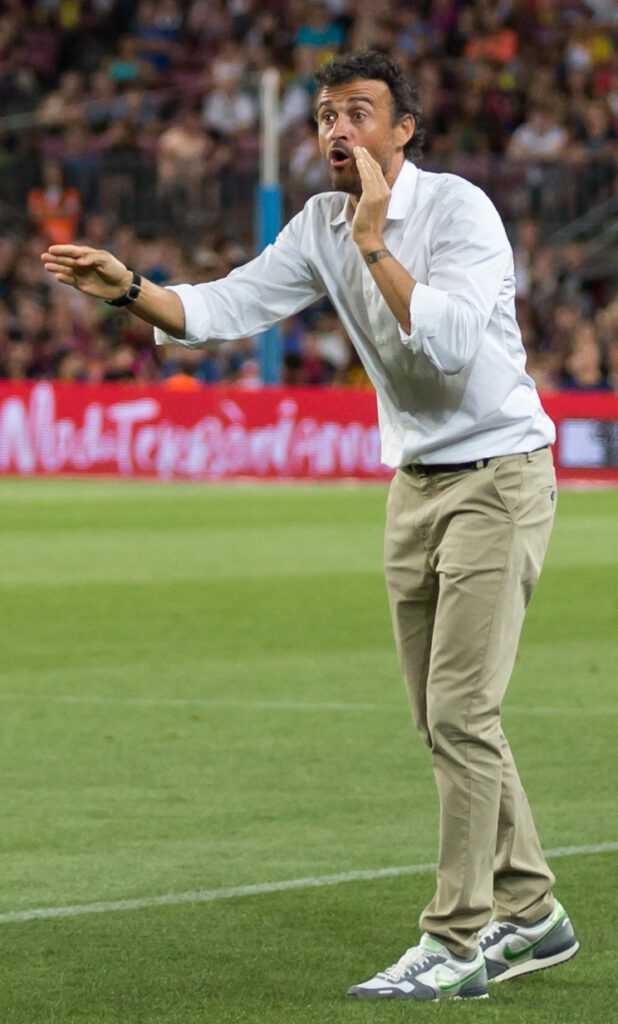
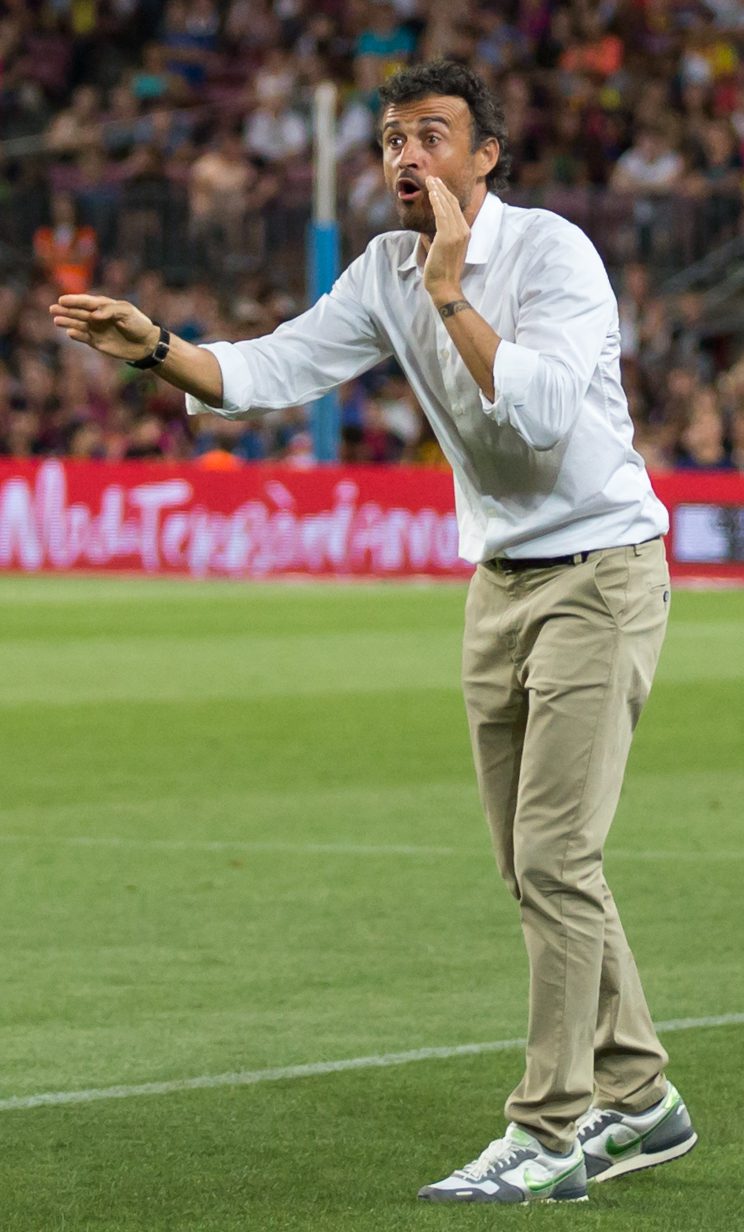
How did Luis Enrique build this fortune?
The answer unfolds through the career, earnings, deals and assets behind the headline estimate.
Luis Enrique before the fame
The background and early turning points that shaped Luis Enrique’s route to prominence.
Luis Enrique Martinez Garcia was born in Gijon in May 1970 and is one of a small group of men to
have played for both Real Madrid and Barcelona and then managed one of them. Since July 2023 he has
held the best-paid job in French football.
His earnings divide into two careers: fifteen seasons as a midfielder at 1990s wages, and eighteen
years in coaching at rates that have risen sharply. The second is where almost all of the money
is.
He began at Sporting de Gijon in 1989, moved to Real Madrid in 1991 and won a league title, then
crossed to Barcelona in 1996 for eight seasons and two more. He took sixty-two caps for Spain and
played at three World Cups, retiring in 2004.
Coaching started in the same building: Barcelona B from 2008 to 2011, then a season at Roma and a
season at Celta Vigo. Those jobs paid in the low millions in total, and their value was the record
that got him the Barcelona first team.
Luis Enrique’s breakthrough years
The career decisions and defining moments that turned recognition into sustained earning power.
Barcelona appointed him in 2014 and he won the treble in his first season: La Liga, the Copa del
Rey and the Champions League. Al Jazeera, writing before the 2025 final, traced the method from there to
Paris, where he arrived in July 2023 with a squad being rebuilt around younger players rather than
around a single superstar.
The payoff was European. PSG won the Champions League in 2025 and retained it in 2026, and beIN Sports set
out the record: twelve trophies from fifteen available competitions in three seasons, and three
European Cups in all for Luis Enrique, which puts him level with Pep Guardiola, Bob Paisley and
Zinedine Zidane and behind only Carlo Ancelotti.
What the job pays him, in cash. L’Equipe has reported his PSG salary at about
EUR 1 million gross a month, or EUR 12 million a year, with
performance bonuses of up to EUR 3 million a year attached to the club’s objectives, and put the
figure under his new contract at about EUR 20 million gross a year. Across three
completed seasons at the old rate, the bonuses those seasons triggered, and three and a half months
of the new deal, PSG has paid him roughly EUR 49 million. Adding our estimates for
Barcelona, Spain and the earlier jobs, coaching has paid him about EUR 80 million
and playing about EUR 25 million on top, roughly $115 million in all.

What Luis Enrique’s work can earn
Reported pay, contracts, royalties and performance income reveal how the fortune was funded.
The 2026 final is the one that moved him into the record books. PSG drew 1-1 with Arsenal at the
Puskas Arena in Budapest on 30 May 2026 and won 4-3 on penalties, with Kai Havertz scoring inside the
opening minutes and Ousmane Dembele equalising from the spot; CNN recorded the shoot-out and Olympics.com the
detail that PSG became the first club to retain the trophy since Real Madrid’s run from 2015 to
2018.
Flashscore named him its Coach of the Year for 2025. His defence of the trophy is under way rather than
finished: ESPN reported him setting out a third consecutive title as the aim, and on 14 October 2026
PSG won 4-2 away at Manchester City, after which he told ESPN his side “could have lost” the match
despite a three-goal lead at half-time.
Recognition for him has tended to follow the teams rather than the personality. The treble at
Barcelona established him; the back-to-back European Cups at PSG established the comparison with
Guardiola and Zidane, which is the frame beIN Sports used after the 2026 final.

Luis Enrique’s business beyond the main career
Endorsements, ownership interests and investments can keep compounding long after the initial breakthrough.
Football managers earn far less from brands than the players they pick, and his portfolio has run
to boot and kit relationships and the occasional campaign rather than long ambassadorships. Endurance
sport has given him a smaller second lane in equipment and event work.
A few hundred thousand euros a year is the reasonable order of magnitude, material but small beside
a EUR 12 million salary. We keep it separate from the coaching pay.
His commercial life is slight by the standards of managers at his level, and his income is
overwhelmingly employment income from clubs and a federation. He has run his public profile on his
own terms, most visibly by broadcasting directly to supporters on Twitch during the 2022 World Cup
rather than expanding the media work around him.
The consequence is that his wealth is accumulated salary taxed as income in Spain, Italy and
France rather than equity, and his balance sheet should be read that way.

Luis Enrique’s notable luxury item
A reported property or major asset offers a tangible glimpse of the wealth behind the public estimate.
Thirty-five years of top-level football income, most of it received in Spain, has gone into
property and investments rather than a visible corporate structure. He kept a base in Catalonia
through the Barcelona years and has lived in Paris since 2023, with the French job taxed at French
rates and the club carrying the employer charges.
The dominant item on the asset side is accumulated post-tax salary, and the dominant uncertainty is
how much has been spent. Spanish marginal rates across his earning years ran in the low to middle
forties, which is the largest of the deductions applied below.
Luis Enrique’s estimated net worth
Public estimates vary because private contracts, investments, taxes and liabilities are not fully disclosed.
How this estimate is calculated
Coaching first, because it is the bulk. PSG, reported: EUR 12 million gross a
year per L’Equipe across three completed seasons, plus objective bonuses of up to EUR 3 million a year which
two Champions Leagues and three league titles will largely have triggered, plus three and a half
months of the new contract at a reported EUR 20 million a year: about EUR 49 million.
Barcelona, ours: three seasons at about EUR 5 million gross, EUR 15 million.
Spain, ours: roughly four seasons near EUR 2.75 million, EUR 11 million.
Roma, Celta and Barcelona B, ours: about EUR 6 million between them. Coaching, about
EUR 80 million. Playing, ours: fifteen seasons from 1989 to 2004, rising from a few
hundred thousand a year to several million, about EUR 25 million. Career gross, about EUR 105
million, or about $115 million.
Retention is the hard part. Spanish personal rates across his earning years ran in the low to
middle forties, Italian and French rates comparably, and advisers take a few per cent more, so a
little under half the gross has survived as cash. Four decades of accumulation have had time to
compound; thirty-five years of living at this income level is expensive. The working supports a range
of $45 million to $75 million, and the figure we publish is its midpoint.
Two things would sharpen it. The first is whether the EUR 20 million on the new contract is gross
or net, a distinction the reporting has not settled and which is worth several million euros a year
on its own. The second is the 1990s playing figure, which is reconstructed from the wage levels of
the era rather than from any contract, and which is the input we would most like to replace.
Confidence: Partly documented — the figure rests on L’Equipe’s reported PSG salary and
bonus structure, with his earlier coaching and playing pay, and his retention rate, estimated by
us.
The Xana Foundation, which he and his wife established in their daughter’s name, funds childhood
cancer research and the building of play and family facilities inside Spanish hospitals, and it is
the charitable work most closely associated with him.
His departures have been the contested moments. Spain’s federation announced the end of his tenure
in December 2022, immediately after the team went out of the World Cup to Morocco on penalties in the
round of sixteen, and presented the decision as a change of cycle. His exit from Barcelona in 2017
was his own, announced with a season still to run.
At PSG the scrutiny has been about selection rather than conduct: building without the squad’s
biggest names drew sustained criticism in his first season, and his handling of individual players
has been argued over in the French press. The results since have changed the terms of that
argument.