
 How Much Are They Worth?
Celebrity fortunes, explained
How Much Are They Worth?
Celebrity fortunes, explained


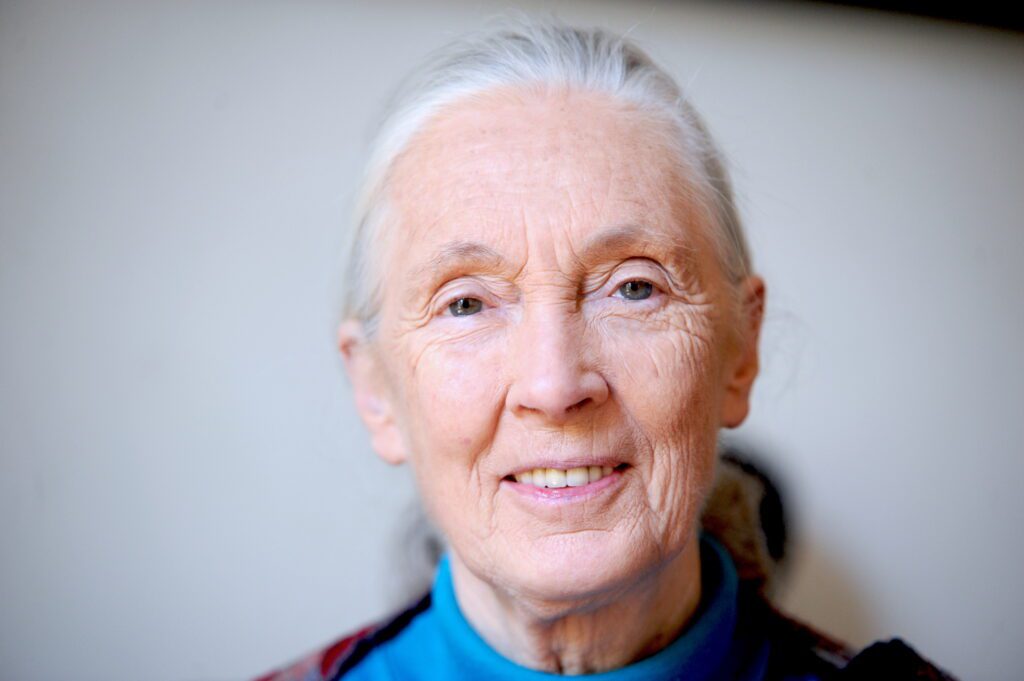
How did Jane Goodall build this fortune?
The answer unfolds through the career, earnings, deals and assets behind the headline estimate.
Before the fame
The background and early turning points that shaped Jane Goodall’s route to prominence.
Jane Goodall was born on April 3, 1934, in London, England, and was raised largely by her mother, Vanne Morris-Goodall. From early childhood she was fascinated by animals, famously carrying around a beloved toy chimpanzee named Jubilee, a gift long before her career gave that fascination a name. She did not attend university straight out of school; instead she worked as a secretary and a waitress to save enough money to travel to Africa, a goal she had held since childhood.
Goodall’s path changed in 1957 when she traveled to Kenya and met paleoanthropologist Louis Leakey, who hired her as his assistant and later sent her to study wild chimpanzees at Gombe Stream in Tanzania beginning in 1960. Her patient, close-range observations there, including chimpanzees making and using tools and hunting for meat, behaviors long thought to be uniquely human, made international headlines. National Geographic funded her research and produced early documentaries and magazine features on her work through the early-to-mid 1960s, turning her into a global public figure. In 1965, despite never having completed an undergraduate degree, she earned a PhD in ethology from Cambridge University.
Photo: Peter Broster via Wikimedia Commons (CC BY 2.0)
The breakthrough years
The career decisions and defining moments that turned recognition into sustained earning power.
Goodall continued her chimpanzee research at Gombe for decades, building one of the longest-running wildlife studies in history. In 1977 she founded the Jane Goodall Institute to fund ongoing research and conservation work, and in 1991 she launched Roots & Shoots, a global youth environmental and humanitarian education program that grew to reach young people in dozens of countries. From the 1980s onward she became a full-time global conservation advocate, spending much of each year traveling and lecturing well into her 90s. She was named a United Nations Messenger of Peace in 2002 and was made a Dame Commander of the British Empire in 2004.

What the work can earn
Reported pay, contracts, royalties and performance income reveal how the fortune was funded.
Goodall’s income never resembled that of a typical celebrity. In her later decades she was a globally in-demand paid public speaker, commanding significant fees for lectures and appearances, and she earned steady royalties from her many books and from documentaries chronicling her life and work. Rather than accumulating personal wealth, she directed large portions of what she earned into the Jane Goodall Institute and its conservation and education programs.
As a prolific author, Goodall’s book royalties formed a core part of her income, including bestsellers such as “In the Shadow of Man” and “Reason for Hope,” among many others written across her career. Public speaking was an equally important revenue stream, with Goodall touring extensively for lectures well into old age. Grants and research funding, much of it channeled through the Jane Goodall Institute, supported her scientific work at Gombe and beyond, though those funds were directed at research and conservation rather than personal wealth.

The business beyond the main career
Endorsements, ownership interests and investments can keep compounding long after the initial breakthrough.
Goodall largely avoided conventional commercial endorsements, keeping her public profile focused on conservation rather than product marketing. She did partner on major media projects with outlets including National Geographic and Discovery, most notably the acclaimed 2017 National Geographic documentary “Jane,” and she lent her name and involvement to various eco-conscious educational partnerships, books, and documentary projects over the decades.
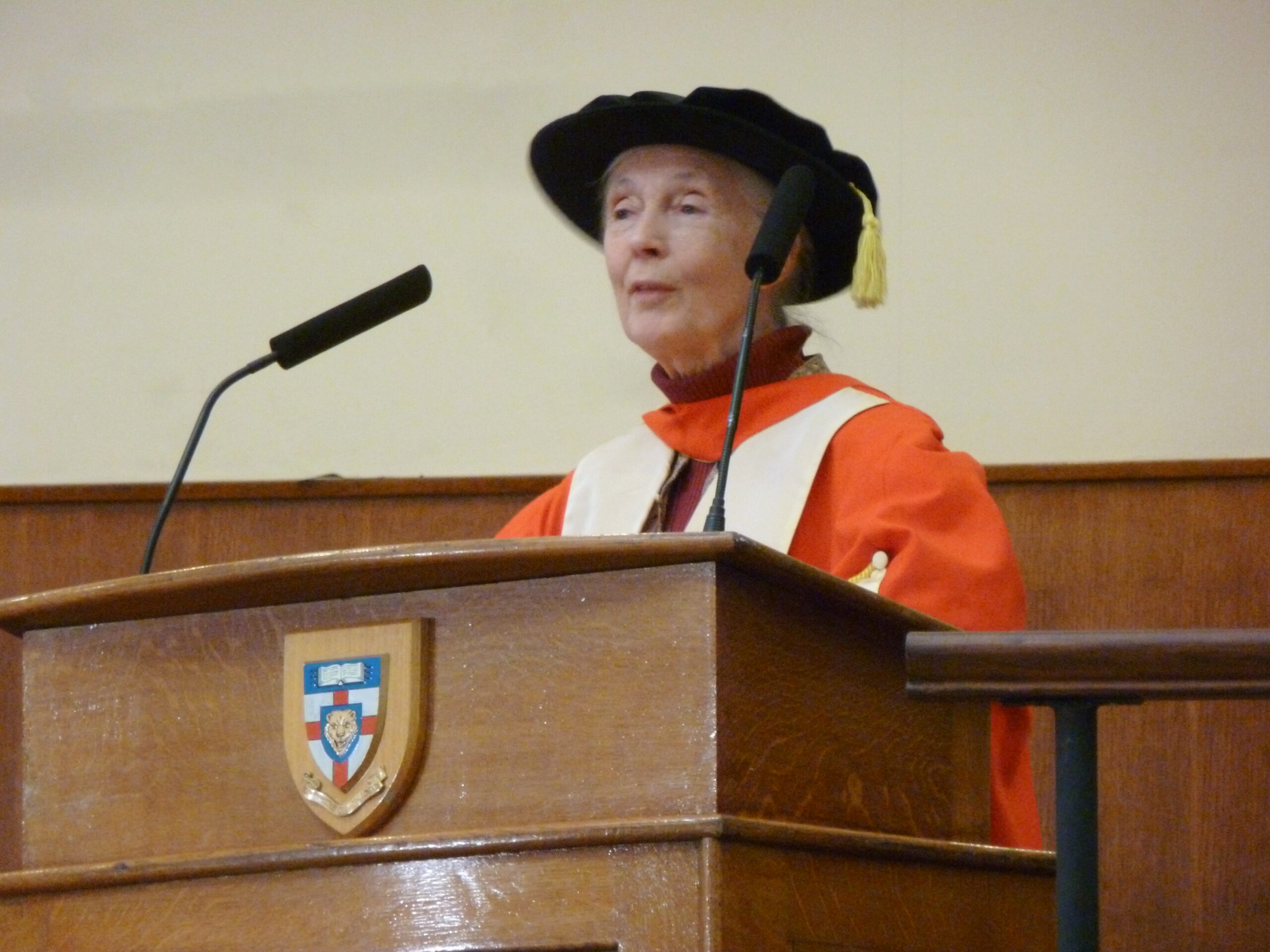
Photo: Simon Fraser University – Communications and Marketing via Wikimedia Commons (CC BY 2.0)
Goodall did not pursue for-profit business ventures. The Jane Goodall Institute, which she founded in 1977, is a nonprofit organization rather than a personal asset, but it was the central vehicle for her life’s work, funding decades of chimpanzee research, habitat conservation, and the Roots & Shoots youth program.

Notable luxury item
A reported property or major asset offers a tangible glimpse of the wealth behind the public estimate.
Goodall lived modestly relative to her level of fame. She maintained ties to her family home, known as “The Birches,” in Bournemouth, England, which she inherited from her family and used as a home base between her extensive travels. There are no public reports of lavish real estate holdings or major personal assets beyond that family home.
Jane Goodall’s estimated net worth
Public estimates vary because private contracts, investments, taxes and liabilities are not fully disclosed.
| Year | Milestone |
| 1960 | Begins chimpanzee research at Gombe Stream, Tanzania |
| 1963-1965 | National Geographic coverage makes her internationally known |
| 1965 | Earns PhD in ethology from Cambridge University |
| 1977 | Founds the Jane Goodall Institute |
| 1991 | Founds Roots & Shoots youth program |
| 2002 | Named a United Nations Messenger of Peace |
| 2004 | Made a Dame Commander of the British Empire |
| 2025 | Dies October 1 at age 91 during a US speaking tour, having remained an active advocate to the end of her life |
Among fellow science-focused public figures, Goodall’s wealth and career path are often compared to broadcaster and naturalist David Attenborough, whose fame also rests on decades of field work and media presence rather than commercial ventures. Within her own field, she is frequently discussed alongside contemporary primatologist Dian Fossey and biologist E.O. Wilson, both of whom similarly prioritized scientific and conservation impact over personal financial gain.
Sources and references
Figures cited above are estimates compiled from public reporting by outlets including Forbes, The Guardian, and the Jane Goodall Institute’s own public disclosures, alongside standard estimates for book royalties, speaking fees, and documentary licensing. As with most public figures who direct earnings into philanthropic work, exact private financial details were never fully disclosed, so these figures represent a well-sourced range rather than an audited total.
Jane Goodall’s financial story was never about accumulating personal wealth — it was about redirecting decades of book royalties, speaking fees, and documentary income into chimpanzee research and global conservation. She passed away in October 2025 having spent a lifetime turning her fame into funding for the causes she cared about most, leaving behind the Jane Goodall Institute and Roots & Shoots as her most lasting legacy.
Answer 5 questions about Jane Goodall and get a free offer
Take the Quiz