

 How Much Are They Worth?
Celebrity fortunes, explained









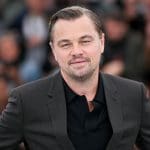

How did Macaulay Culkin build this fortune?
The answer unfolds through the career, earnings, deals and assets behind the headline estimate.
Macaulay Culkin before the fame
The background and early turning points that shaped Macaulay Culkin’s route to prominence.
Macaulay Carson Culkin was born on 26 August 1980 in New York City, the third of seven children, and grew up in a cramped Upper East Side apartment. Several of the Culkin children were put into acting; two, Macaulay and later Kieran, became famous for it. Home Alone made him the most famous child in the world in 1990, and by the time he stepped away from acting in the mid-1990s he had been the highest-paid child performer of his generation by a distance. The interesting question about his money is not how much he made but how much of it he kept.
Culkin’s first screen roles were small and paid at scale: Rocket Gibraltar in 1988, then See You in the Morning and Uncle Buck in 1989, opposite John Candy. A child actor’s fee for supporting work on a studio comedy then ran from a few thousand dollars a week to a low five-figure total for the picture – our estimate, from the Screen Actors Guild scales of the day and the size of the parts. It was Uncle Buck that led to the next job: John Hughes wrote Home Alone with Culkin in mind.
Macaulay Culkin’s breakthrough years
The career decisions and defining moments that turned recognition into sustained earning power.
Home Alone opened in November 1990, stayed at number one in the United States for twelve weeks, and took over 470 million dollars worldwide on an 18 million dollar budget. Culkin’s fee was about 100,000 dollars – a normal price for a first-time child lead.
The fee ladder that followed is the core earning of his craft, and it is steep: roughly 100,000 dollars for Home Alone, one million for My Girl in 1991, 4.5 million dollars for Home Alone 2: Lost in New York in 1992 – then the highest fee ever paid to a child actor – and around eight million dollars each for Getting Even with Dad and Richie Rich in 1994. Those rungs have been reported consistently since the period, and Culkin has been direct about the money himself, saying he prefers Home Alone 2 to the original because he was paid more for it (The Hollywood Reporter). Totalled, his acting fees across six years come to about 22 million dollars in early-1990s money, above 45 million today, earned entirely between the ages of eight and fourteen.

What Macaulay Culkin’s work can earn
Reported pay, contracts, royalties and performance income reveal how the fortune was funded.
Beyond the fees, he negotiated participation, rarer for a child performer than the salaries suggest: he has described his deal on Home Alone 2 as five per cent of the net and fifteen per cent of merchandising. The two are worth separating, because one is real and the other probably is not. Merchandising pays against gross sales, and Home Alone 2 had a genuine hit in the Talkboy recorder, which sold in the millions over two Christmases; fifteen per cent of that royalty stream is a seven-figure line on our estimate. Net profit participation is calculated after studio accounting and on major releases very often produces nothing at all – the reason first-dollar gross is the backend structure that reliably pays, as covered in our piece on the biggest backend deals in film history.
For about four years Culkin was the most recognisable child on earth, and Home Alone remains a fixture of the December television schedule, so each new generation meets him at the age he was when he made it. He received a star on the Hollywood Walk of Fame in December 2023, an unusually reflective occasion at which he spoke candidly about what childhood fame had been like (Variety). The later career has been deliberately oblique: the band Pizza Underground, the website and podcast Bunny Ears, and a live tour of Home Alone screenings at which he appears in person.

Macaulay Culkin’s business beyond the main career
Endorsements, ownership interests and investments can keep compounding long after the initial breakthrough.
Culkin has been selective to the point of scarcity, and the few campaigns he has done work precisely because of it – the 2018 Google Assistant commercial that restaged Home Alone shot for shot being the obvious example. A nostalgia campaign of that kind, with a major technology advertiser and a licensed property attached, pays the talent in the high six to low seven figures, our estimate from the going rate for celebrity leads in national campaigns of that scale. The scarcity is the strategy.
Culkin’s ventures have been small, owned and personal rather than corporate. Bunny Ears began as a satirical lifestyle website and became a podcast with a substantial audience; the Pizza Underground toured internationally; the live Home Alone dates play theatres and arenas. Economics at that level produce hundreds of thousands of dollars a year rather than millions – our estimate, from typical advertising rates for an independent podcast of that size and theatre-scale ticket revenue after costs. It is not the money that makes him wealthy, but it is income he owns outright.

Macaulay Culkin’s notable luxury item
A reported property or major asset offers a tangible glimpse of the wealth behind the public estimate.
Culkin has owned property in New York and, latterly, in Los Angeles, where he lives with the actress Brenda Song and their two children. Our estimate for his property position is three to seven million dollars – an upper-middle-class footprint rather than an estate, consistent with someone who has lived quietly for thirty years on preserved capital. The larger asset is intangible: a perpetual residual interest in two of the most repeated films in television history, plus the ability to fill a theatre by turning up next to one of them.
Macaulay Culkin’s estimated net worth
Public estimates vary because private contracts, investments, taxes and liabilities are not fully disclosed.
How this estimate is calculated
Begin with the craft earnings: roughly 22 million dollars in acting fees between 1989 and 1994, from about 100,000 dollars for Home Alone to some eight million a picture at the peak, with the Home Alone 2 participation terms coming from him directly (The Hollywood Reporter). Tax at early-1990s Californian and federal rates takes a little under half, leaving perhaps 12 million dollars net – capital held in trust throughout his minority and therefore invested rather than spent. Add the Home Alone 2 merchandising participation, which we model at one to four million dollars over the two Christmases the toy line ran, and thirty years of residuals from films that air every December, which we put at a low six figures a year. Add later podcast, band and tour income; subtract three decades of living costs; and set the five per cent net participation at zero, because that is what net participations on studio releases usually pay. It assumes the trust was invested conventionally.
Compounded at ordinary market returns over thirty years, a preserved base of that size lands in the high teens of millions, which is where the range below sits. The reason he is worth this rather than nothing is a single procedural decision taken in a family courtroom when he was fourteen – and the reason he is worth this rather than a hundred million is that he chose, at the height of his earning power, simply to stop.
The working supports a range of $16 million to $22 million. The figure we publish is its midpoint.
Confidence: Partly documented — the fee ladder and his own account of the participation terms are on the record, while the residual income, the merchandising share and thirty years of compounding are modelled.
Think you know Macaulay Culkin? Take the quiz: Easy · Medium · Legendary
Culkin has supported children’s charities and has spoken repeatedly about the treatment of child performers, with the authority of someone the system worked on and, largely, worked out for. His public image has been rebuilt on his own terms: two decades of being written about as a cautionary tale were replaced, through the podcast, the Walk of Fame appearance and a few well-chosen interviews, with an accurate story – a man who stopped working because he had enough money and did not want to.
The most persistent story about him is also the most inaccurate. The commonly repeated version is that Culkin emancipated himself from his parents as a teenager. He has said that is not what happened: what he did was have his parents’ names removed from his trust fund and an independent executor appointed to oversee it, during a custody dispute in which the trust was itself at stake (Variety). He did not sever the family relationship in law; he removed control of the money from it, and the money survived the process. Disputes of that kind between child performers and their parents were common enough in the period to become a genre of litigation in their own right (The Hollywood Reporter).