
 How Much Are They Worth?
Celebrity fortunes, explained



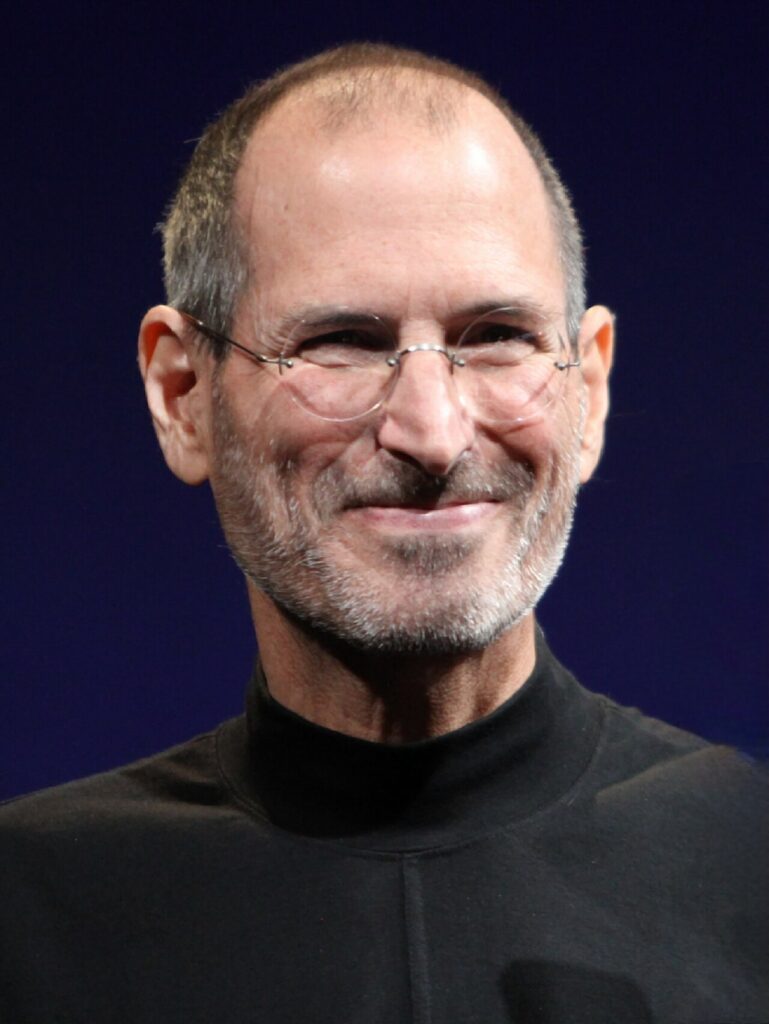
How did Steve Jobs build this fortune?
The answer unfolds through the career, earnings, deals and assets behind the headline estimate.
Steve Jobs before the fame
The background and early turning points that shaped Steve Jobs’s route to prominence.
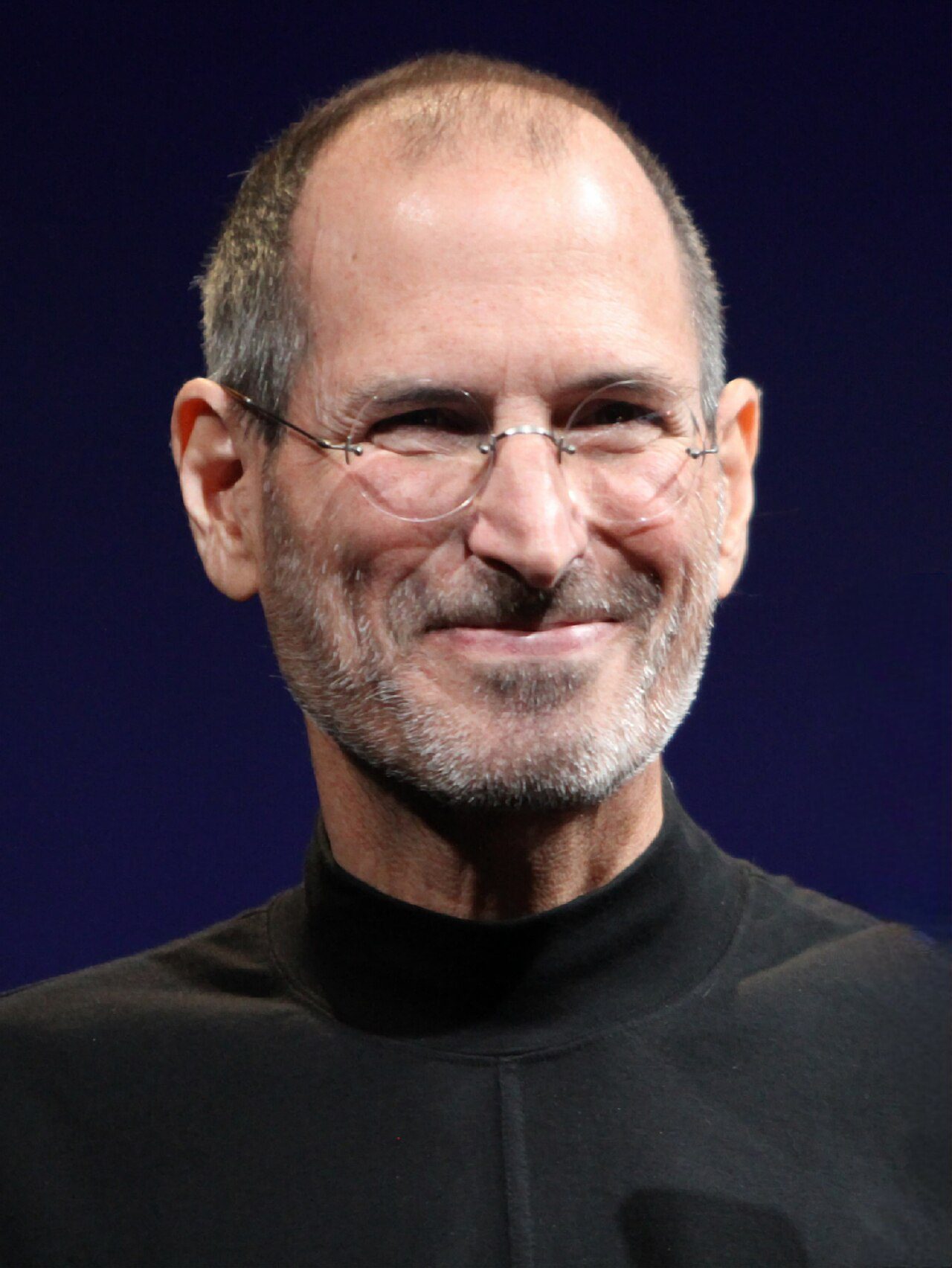
Steve Jobs was born on 24 February 1955 in San Francisco and adopted by Paul and Clara Jobs, who raised him in what became Silicon Valley. He co-founded Apple in a Los Altos garage in 1976 with Steve Wozniak, was forced out in 1985, and returned in 1997 to lead the company through the iMac, iPod, iPhone and iPad. He died on 5 October 2011, aged 56.
His money is unusual among founders because so little of it came from the company he is synonymous with. The story told here is the share register, twice over: an Apple stake he sold in anger and rebuilt from a single grant, and a film studio bought for pocket change that became the largest individual holding in Disney.
Apple went public in December 1980, and Jobs, then 25, held about 15 per cent of it, a stake the flotation valued at over 200 million dollars. Five years later, after losing a boardroom fight with the chief executive he had hired, he sold all but one share – kept so he could attend annual meetings – for around 100 million dollars after tax (Inc.).
He put the proceeds into two companies. NeXT, a workstation maker, absorbed most of it. The other was the computer graphics division of Lucasfilm, bought in 1986 for 5 million dollars with a further 5 million put in as working capital (Fortune), and renamed Pixar. He owned 80 per cent of it and funded its losses personally for the best part of a decade.
Steve Jobs’s breakthrough years
The career decisions and defining moments that turned recognition into sustained earning power.
Toy Story opened in November 1995 and Pixar floated a week later, its shares closing at 39 dollars against an expected 12 to 14. Jobs’s 80 per cent stake was worth more than a billion dollars that afternoon, and as Fortune has put it, he did not become a billionaire by running Apple – he became one by backing Pixar (Fortune).
Apple bought NeXT in December 1996 for 429 million dollars in cash plus 1.5 million Apple shares issued to Jobs personally (Apple’s SEC filing), which brought him back to the company. From 1997 he took a salary of one dollar a year (CBS News). It is a good story and a slightly misleading one: it tells you nothing about his wealth, because his pay was never in salary. It was in equity, and the equity that mattered most was not Apple’s.

What Steve Jobs’s work can earn
Reported pay, contracts, royalties and performance income reveal how the fortune was funded.
The Apple stake was rebuilt by a single decision. In 2003 he surrendered options over 27.5 million shares, then underwater, in exchange for a restricted grant of 5 million shares, which a later split doubled to 10 million (Apple’s 2003 quarterly filing). After the tax withheld on vesting, 5.5 million remained, and he never sold another: by late 2010 that holding was worth 1.84 billion dollars (CBS News), and at his death, with Apple at about 380 dollars a share, roughly 2.1 billion. One tech analyst calculated that the options he gave up would have been worth 10 billion dollars by 2010 (AppleInsider).
The larger fortune came from the other company. In 2006 Disney acquired Pixar for 7.4 billion dollars in an all-stock deal, which converted his Pixar holding into Disney shares and made him Disney’s largest individual shareholder (CNBC). The exchange gave him 138 million shares, about 6.3 per cent of Disney, worth 3.9 billion dollars on the day (NBC News).
He was named Fortune’s CEO of the decade in 2009, received a Grammy Trustees Award posthumously in 2012 and the Presidential Medal of Freedom in 2022. The scale of the Disney position was itself a matter of public record: on his death the Steven P. Jobs Trust reported holding about 138 million Disney shares, a stake of roughly 7.7 per cent, worth in the region of 4.6 billion dollars (Bloomberg).

Steve Jobs’s business beyond the main career
Endorsements, ownership interests and investments can keep compounding long after the initial breakthrough.
None. He never endorsed a product that was not Apple’s, and the company’s keynotes were the only advertising he ever fronted. The nearest thing to a personal endorsement fee in the record is a 1999 bonus from Apple’s board in the form of a Gulfstream V jet, reported at about 90 million dollars including the tax the company paid on it, which is why the later filings show him being reimbursed for flying his own plane on Apple business.
Apple, NeXT and Pixar are the three, and only one of them ever paid him a salary worth the name. Apple’s compensation to him after 1997 was the dollar, the jet and the 2003 grant; its filings for fiscal 2010 show the dollar, no bonus, no new equity since 2003 and 248,000 dollars reimbursed for company travel on his own aircraft (CBS News). Pixar, once public, paid him as chief executive but his return was the stake. NeXT produced no profit in its life and was sold for the operating system that became macOS.

Steve Jobs’s notable luxury item
A reported property or major asset offers a tangible glimpse of the wealth behind the public estimate.
He lived, by billionaire standards, plainly: a house in Palo Alto bought in the 1990s, and a Woodside mansion he never occupied and eventually had demolished in 2011 after a decade of planning disputes. The one indulgence was the 78-metre yacht Venus, designed with Philippe Starck and completed in the Netherlands after his death for his family’s use.
The two share positions dwarfed everything else: 138 million Disney shares and 5.5 million Apple shares, together about 6.7 billion dollars at the October 2011 prices. His holdings passed to a trust led by his widow, Laurene Powell Jobs; because the assets were held in living trusts rather than passing through probate, the estate was never itemised publicly in the way Prince’s was.
Steve Jobs’s estimated net worth
Public estimates vary because private contracts, investments, taxes and liabilities are not fully disclosed.
How this estimate is calculated
The documented core is two share counts. Disney: approximately 138 million shares, about 7.7 per cent of the company, disclosed in a trust filing after his death and worth roughly 4.6 billion dollars at that point (Bloomberg). Apple: 5.5 million shares, unchanged since the 2003 grant vested (CBS News), worth about 2.1 billion dollars at the early-October 2011 price. Together, 6.7 billion dollars.
To that we add the yacht, the houses and the remainder of the 1985 and 1996 cash, which we put at 200 to 500 million dollars, and allow for the Disney and Apple prices moving by a few per cent depending on which day in October 2011 is used. That produces the range below. Published assessments at his death spanned roughly 6.5 to 10.2 billion dollars; the higher figures counted Apple options he had already surrendered or valued the stakes at later prices, and the range here stays with what the filings show he owned. The assumption is that no large asset sat outside the two trusts.
The dollar-a-year salary was never modesty; it was a bet that owning the company would pay better than being paid by it, and the two share registers he left behind say he won it twice.
The working supports a range of $6.5 billion to $8 billion. The figure we publish is its midpoint.
Confidence: Documented — both share positions are in SEC and trust filings at his death; only the property and private assets are modelled.
Think you know Steve Jobs? Take the quiz: Easy · Medium · Legendary
He created no foundation in his lifetime and said almost nothing about giving, which drew criticism from those who compared him with Bill Gates; Apple’s employee gift-matching programme began only after his death. The giving has come since, through Laurene Powell Jobs’s Emerson Collective, which has directed billions into education, immigration and journalism from the fortune he left. He was content for the money to stay in the background.
The one financial controversy was options backdating. An internal Apple inquiry in 2006 found that grants between 1997 and 2002, including one to Jobs later cancelled, had been backdated; the company restated its accounts, two former executives settled with the Securities and Exchange Commission, and Jobs was not charged. Labour conditions at Foxconn, Apple’s Chinese assembler, drew sustained scrutiny in his final years, and an antitrust case over no-poaching agreements between Apple, Google and others, in which his emails featured, was settled by the companies for 415 million dollars in 2015.